

Chieko Shiraishi
鹿渡り
Deer Crossing
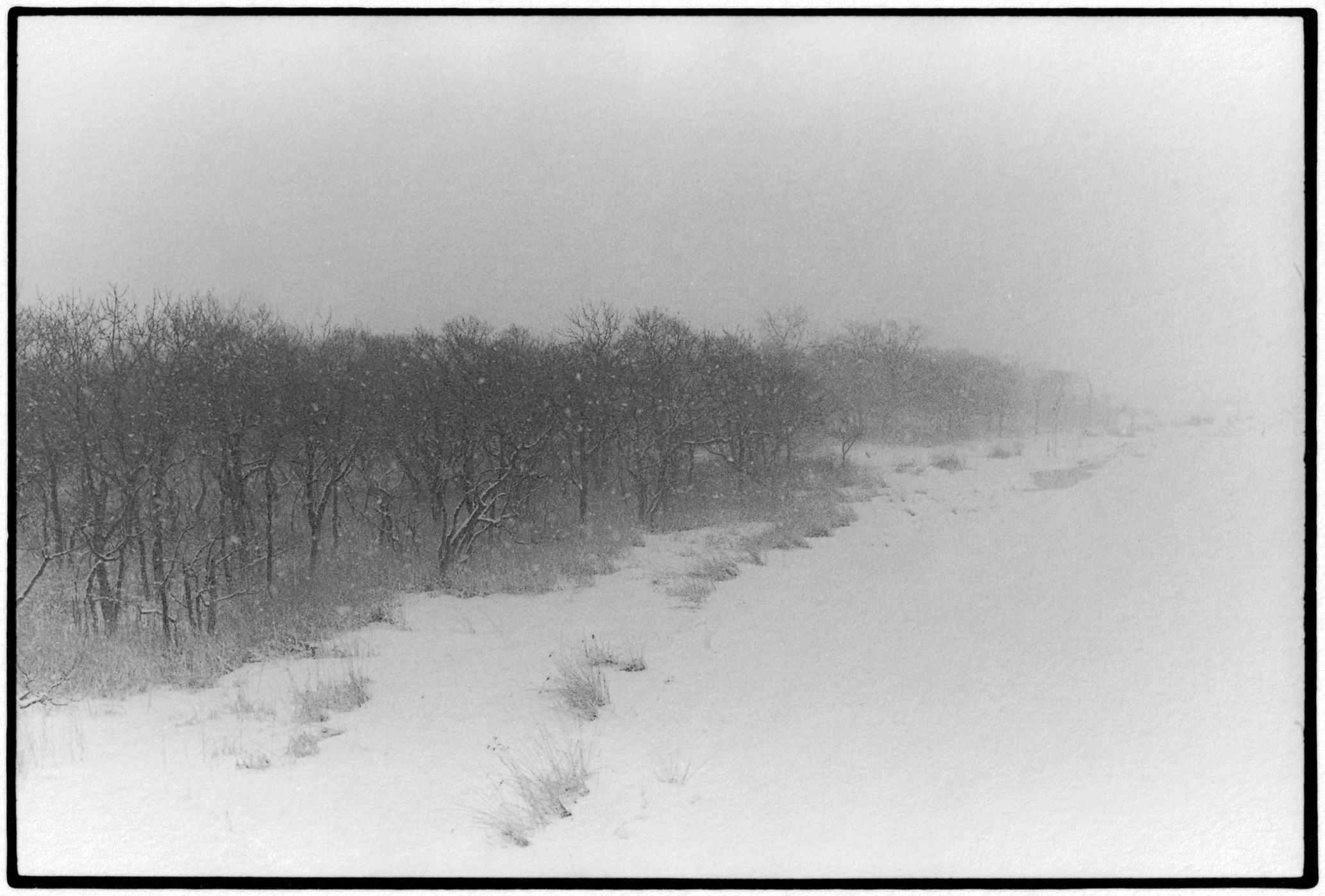
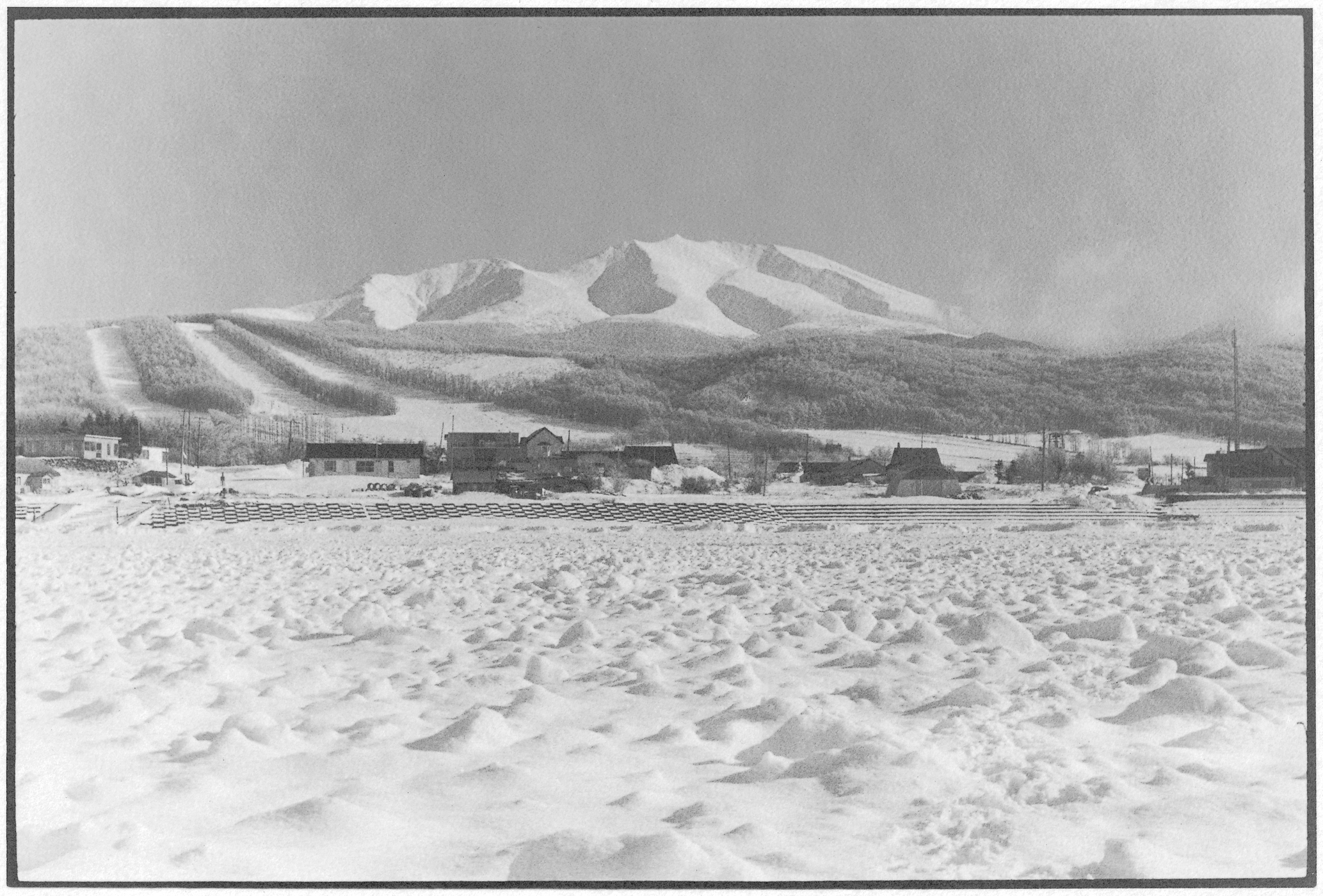
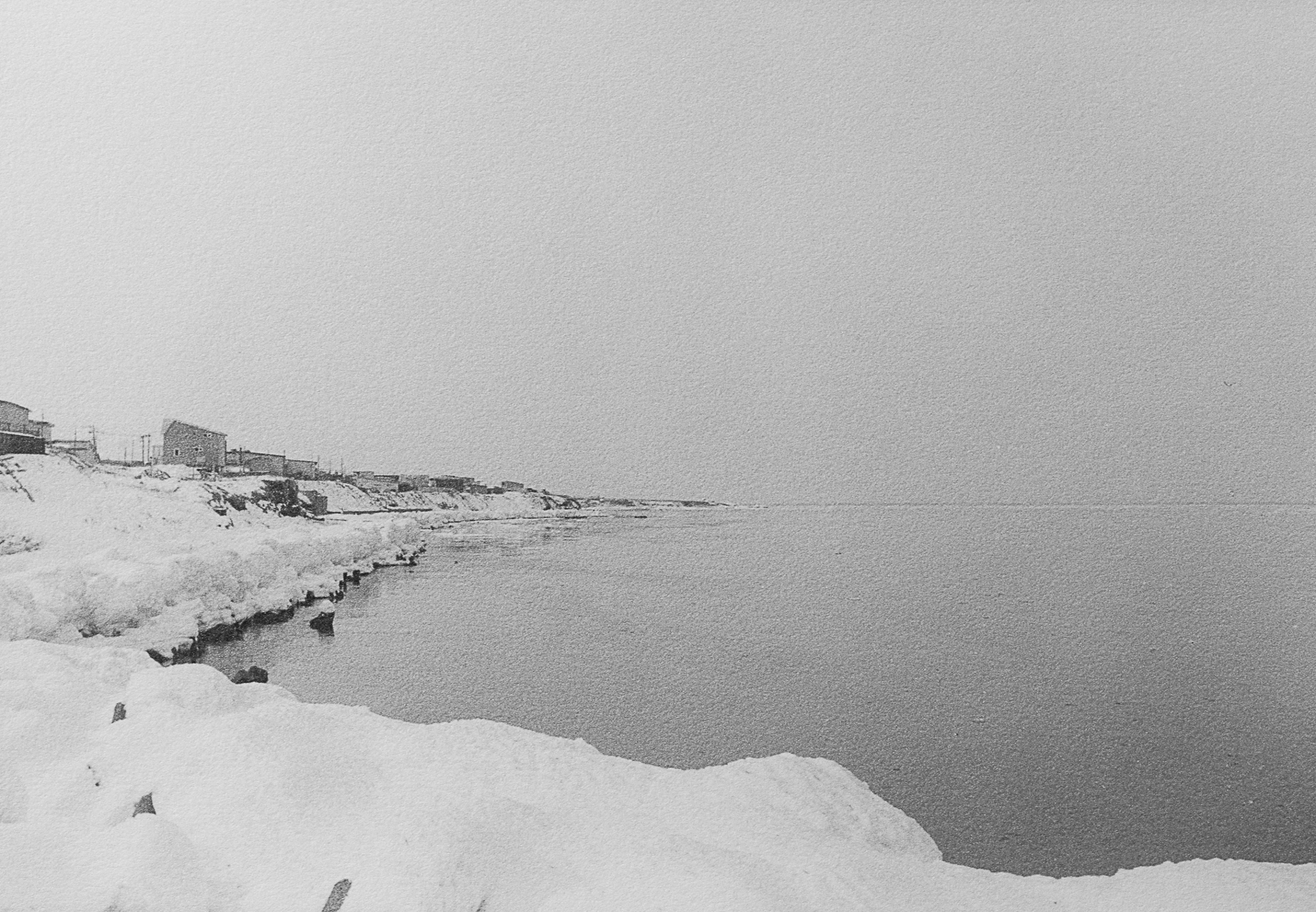
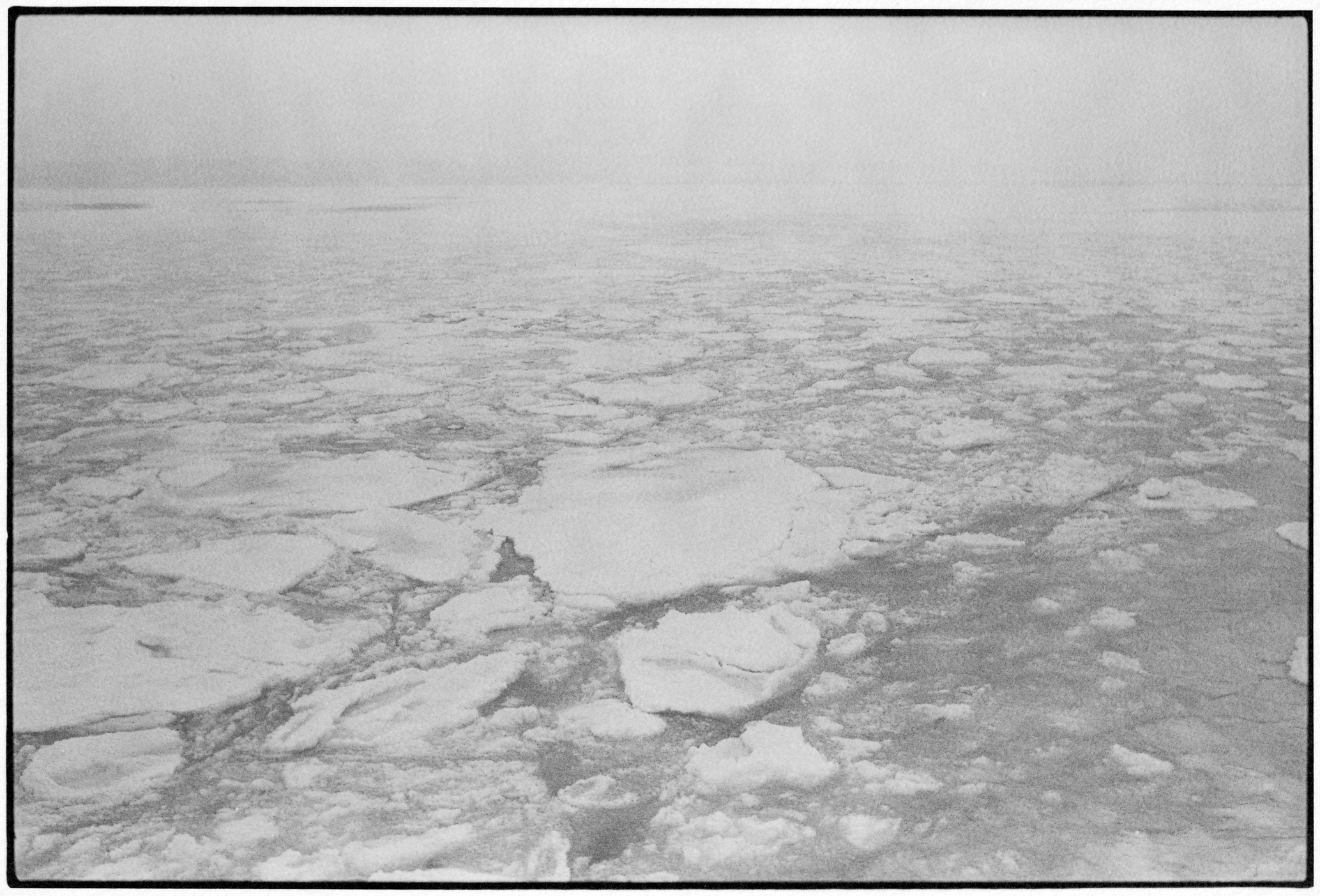
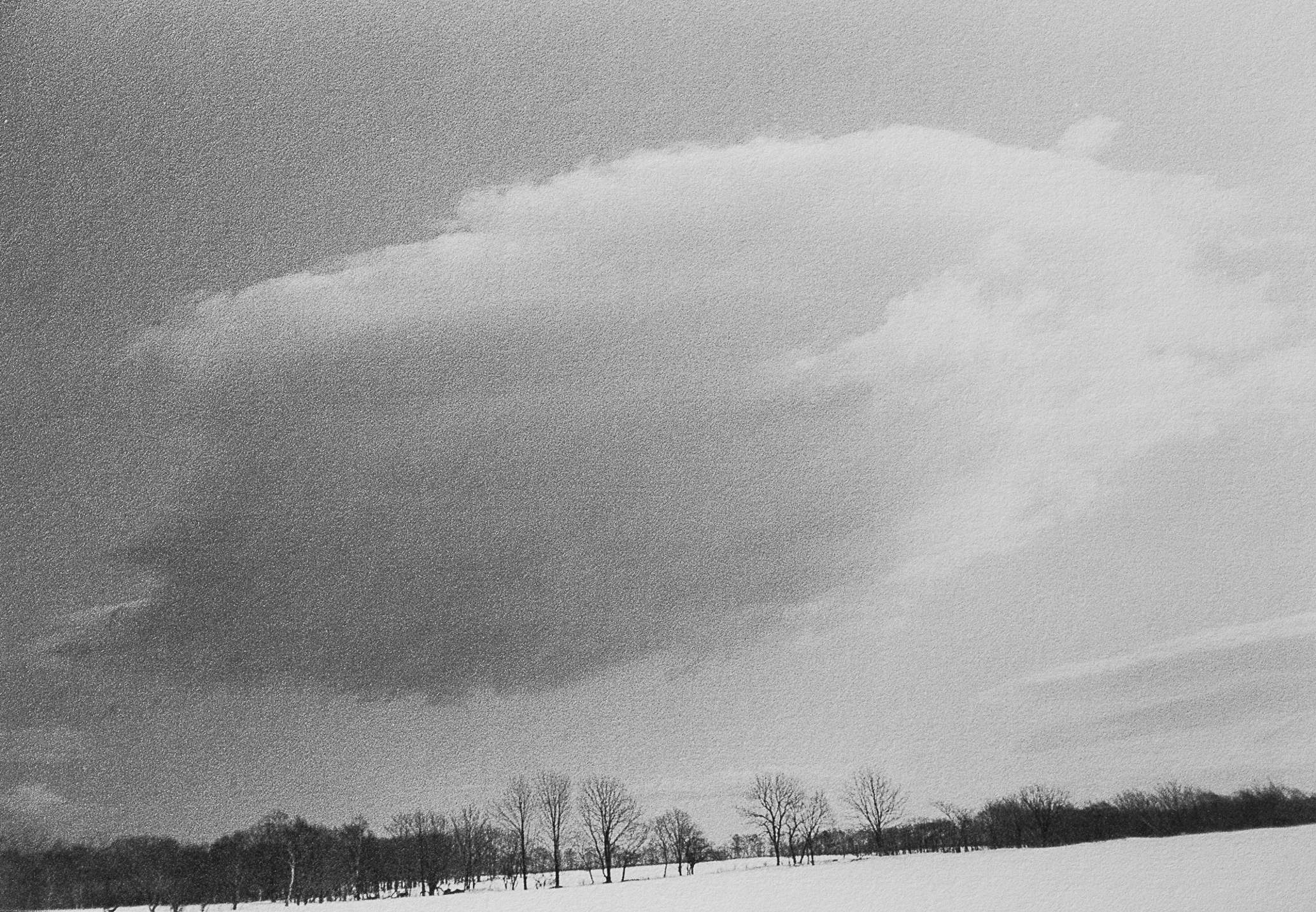
冬の北海道、道東。
薄曇りの空と雪がぼんやりとあたりを照らし、白くほのかな光りがどこまでも大地を覆っている。
真っ青な晴天の東京から来ると、そこには眠っているような静けさがあり、一気に遠い土地に迷い込んでしまう。
無音に包まれて耳をすます。
白い無音の大地では、遠い森の樹々の枝から、ひとかたまりの雪が落ちる音までも、聴こえてきそうだった。
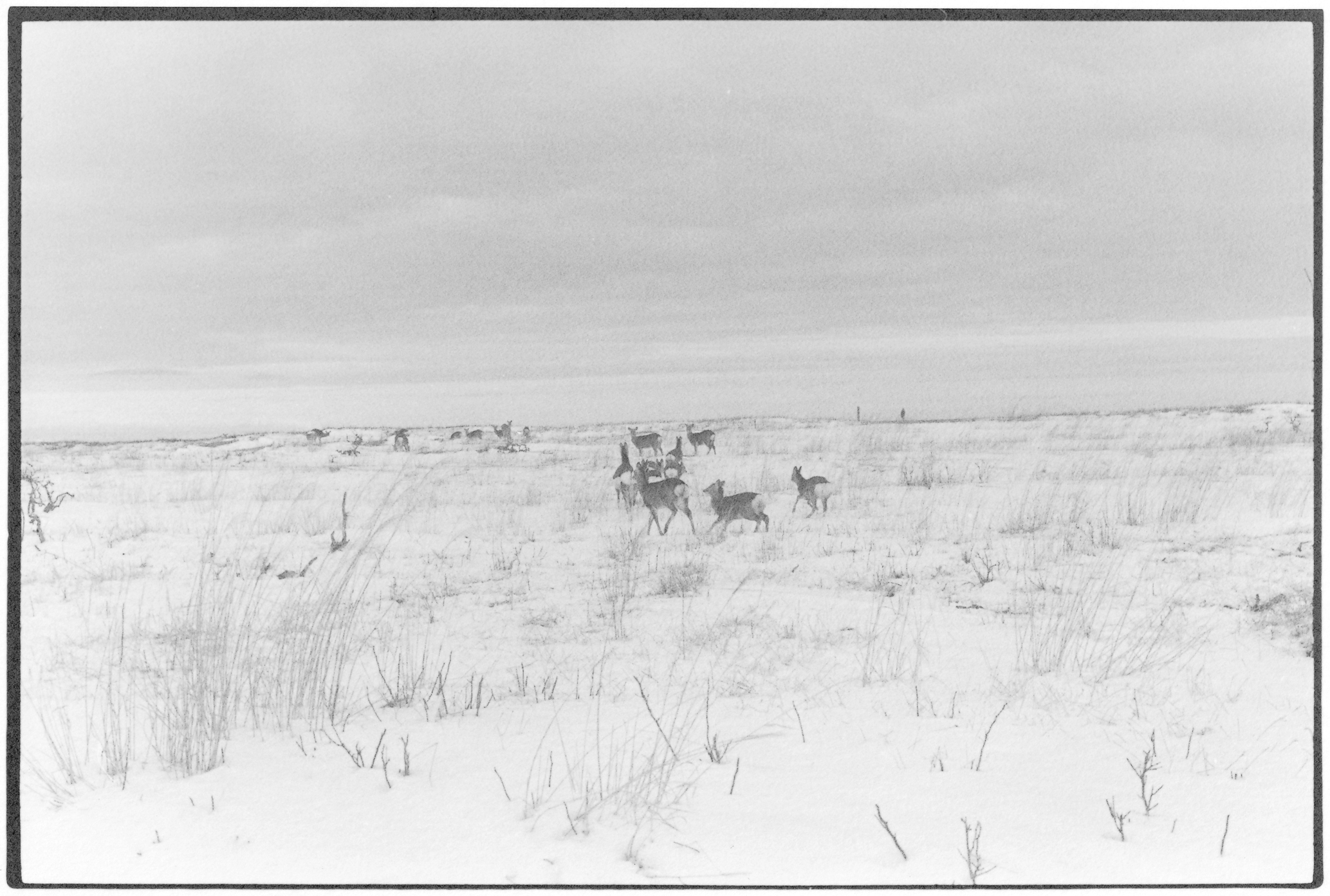
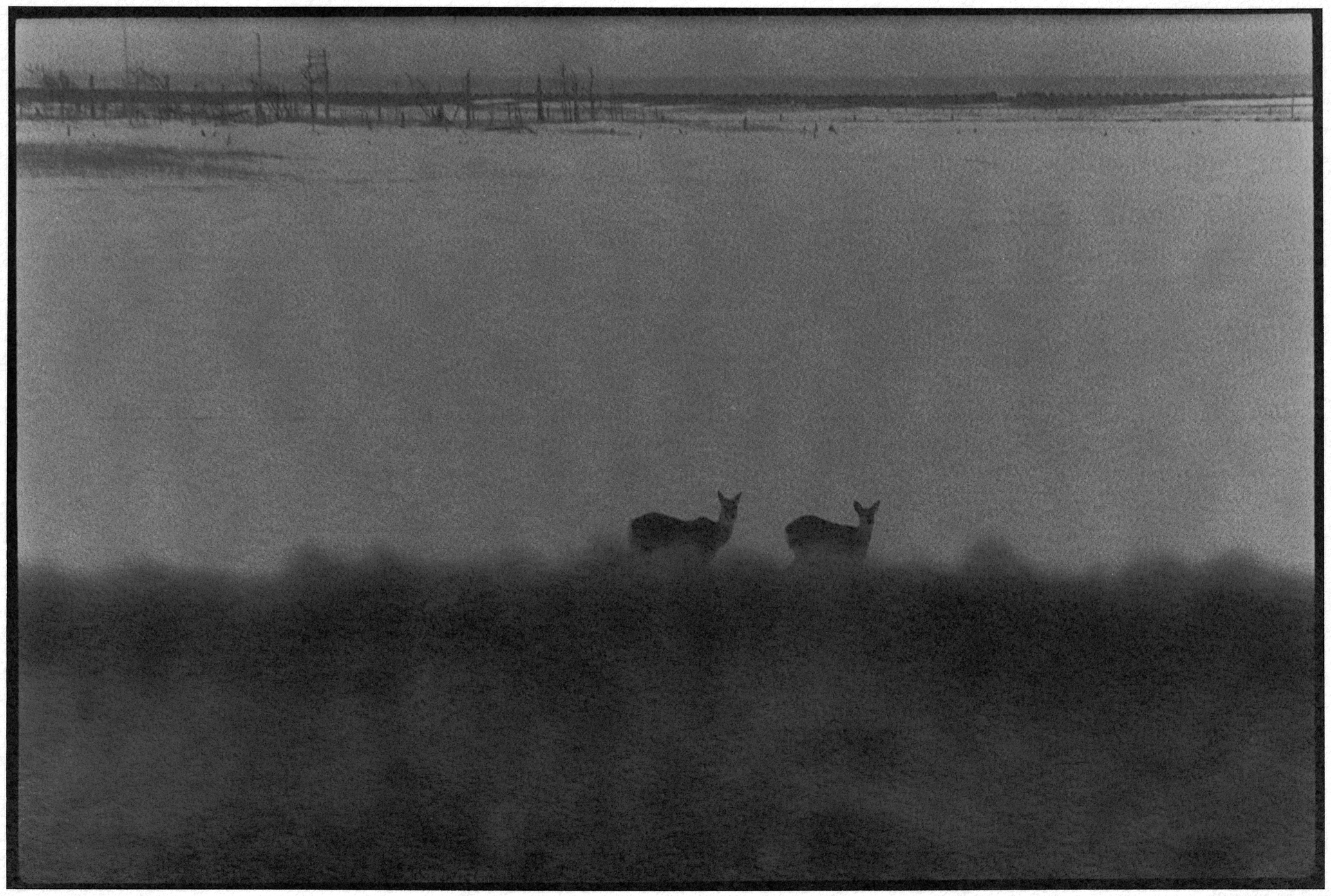
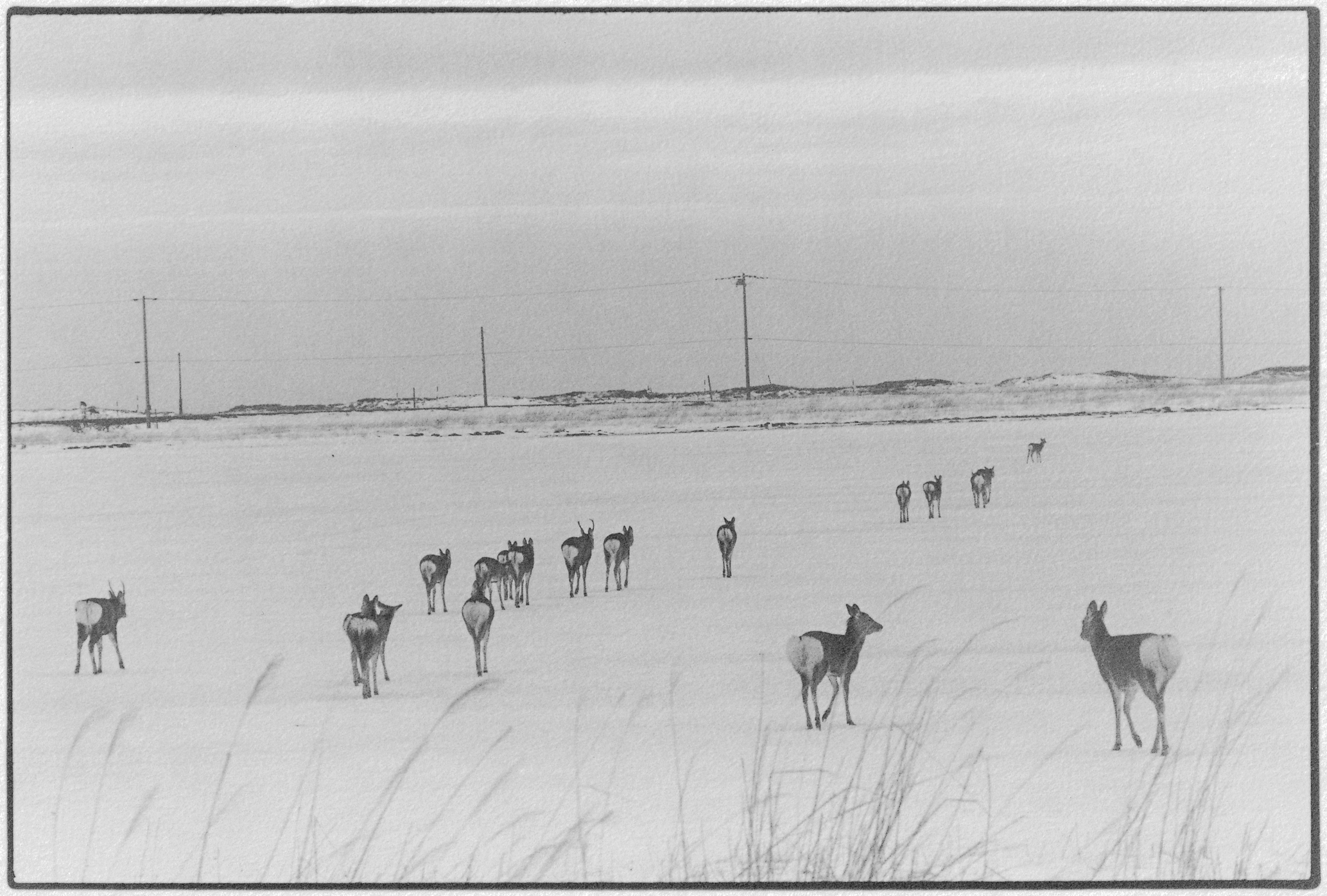
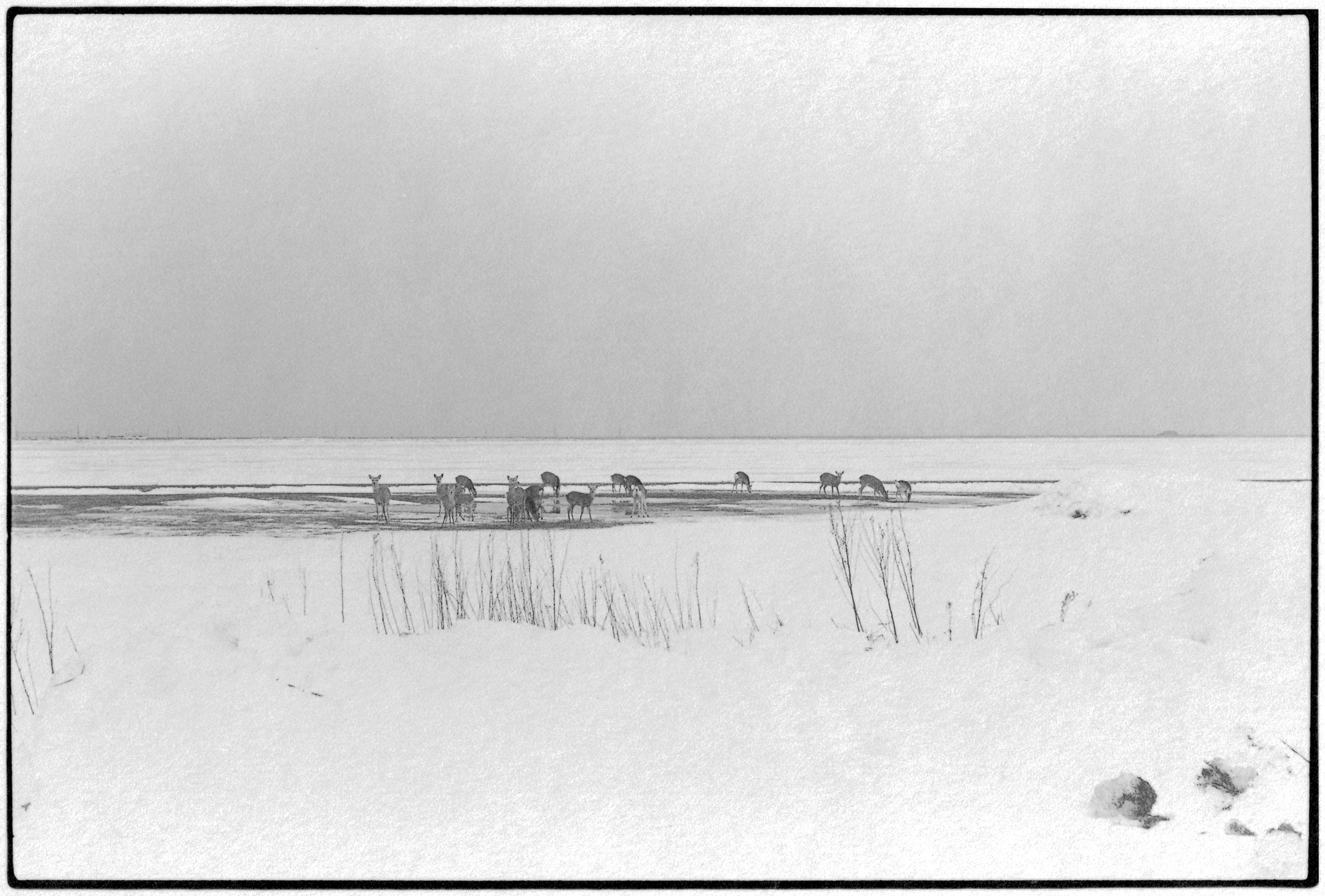
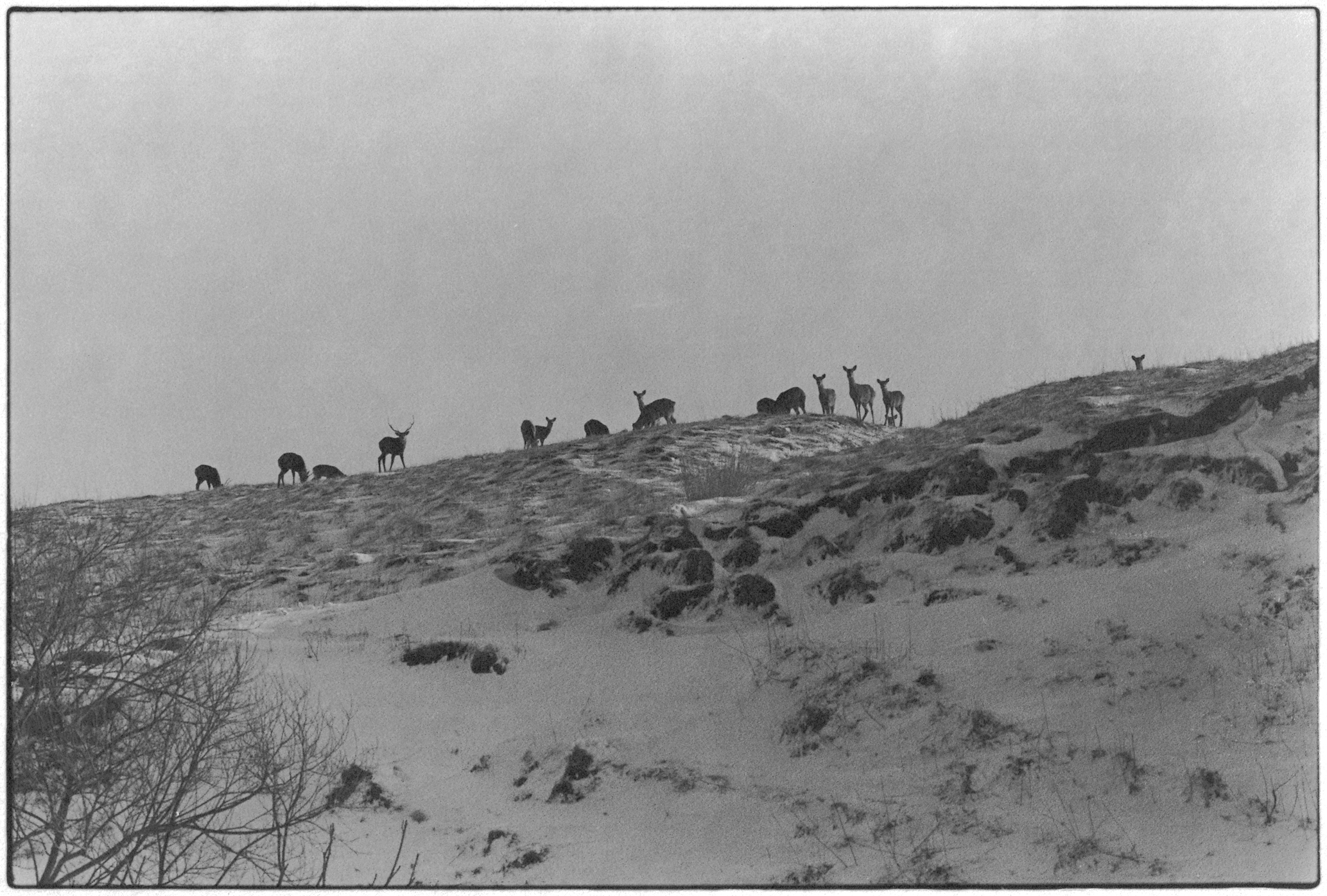
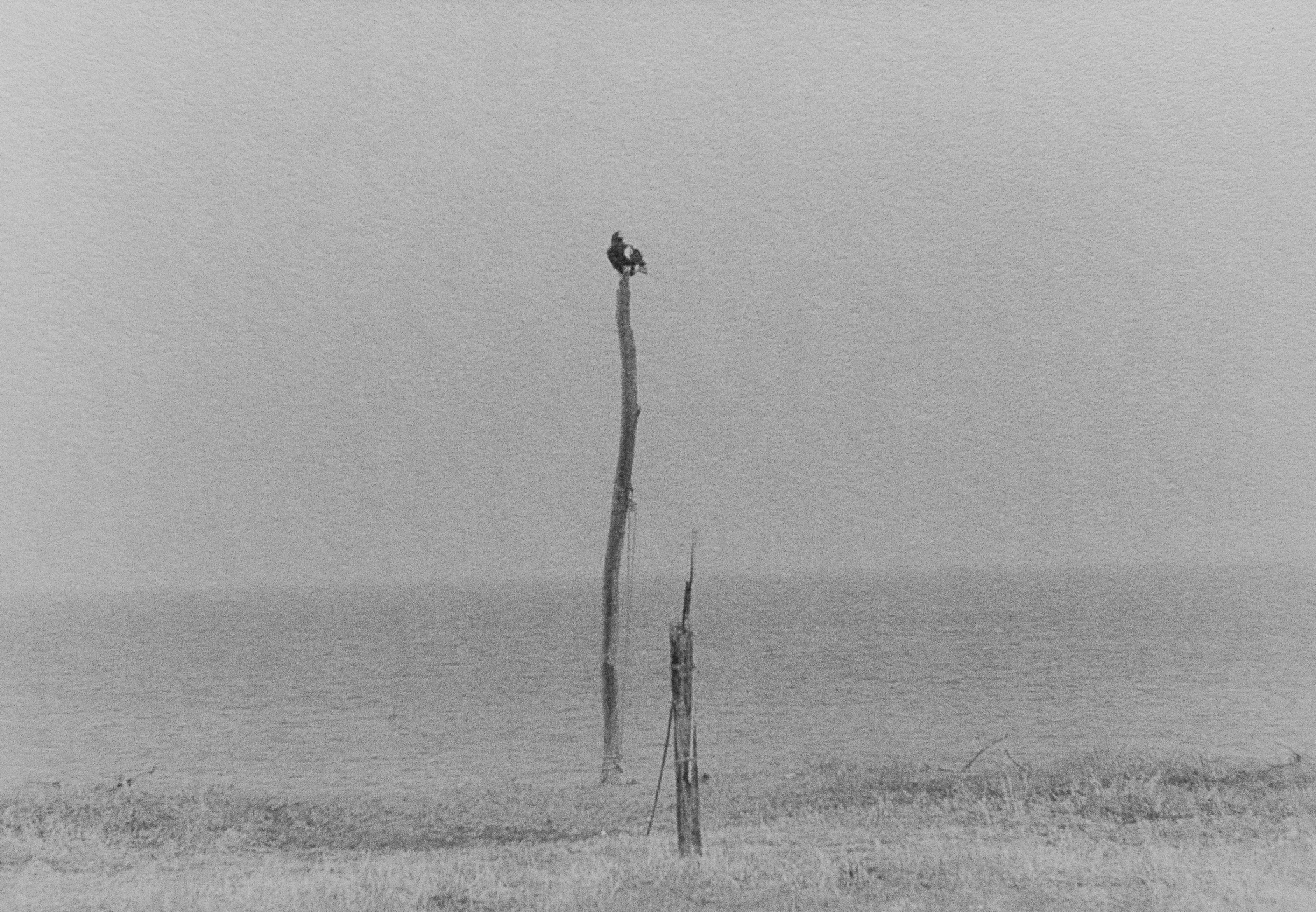
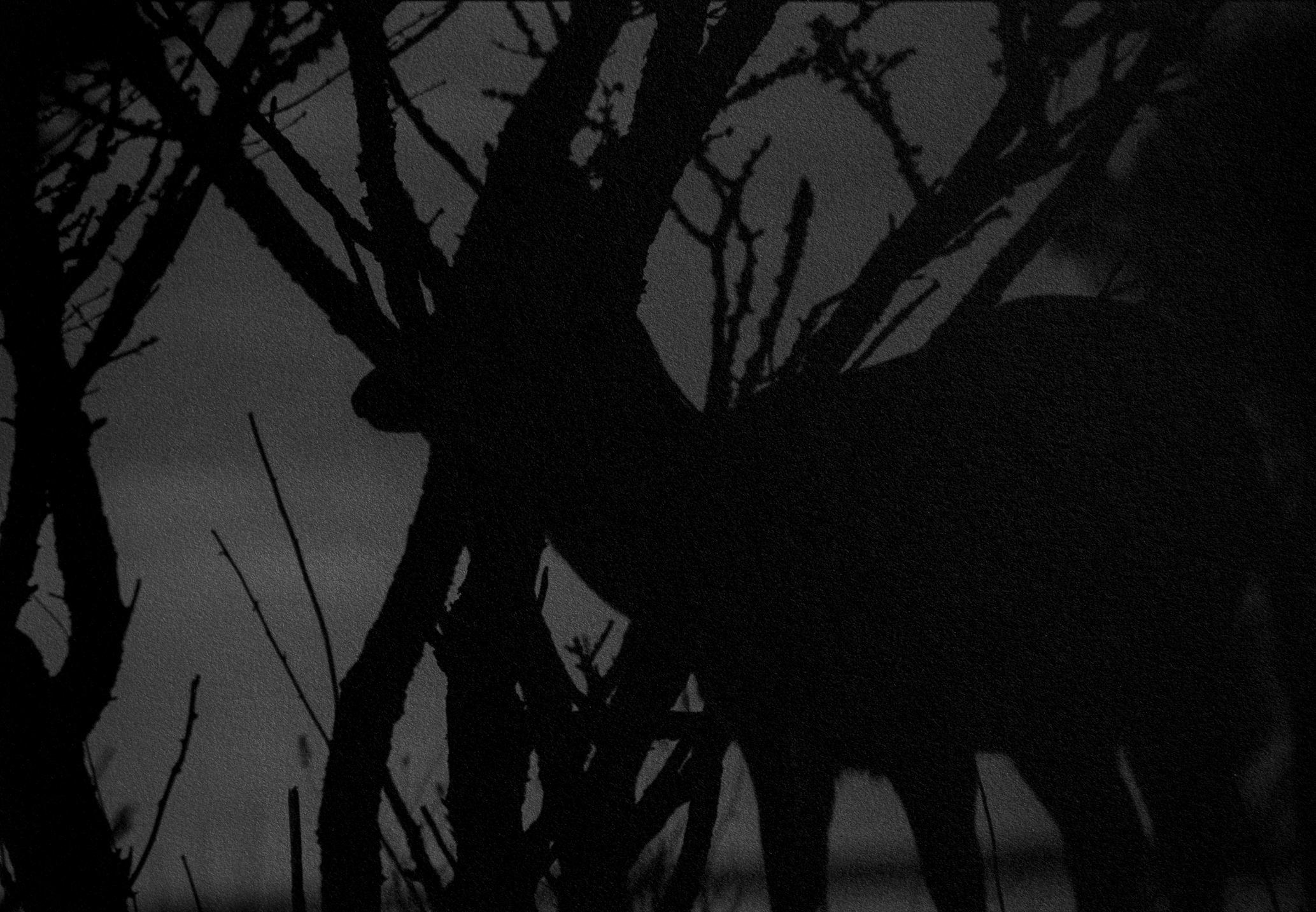
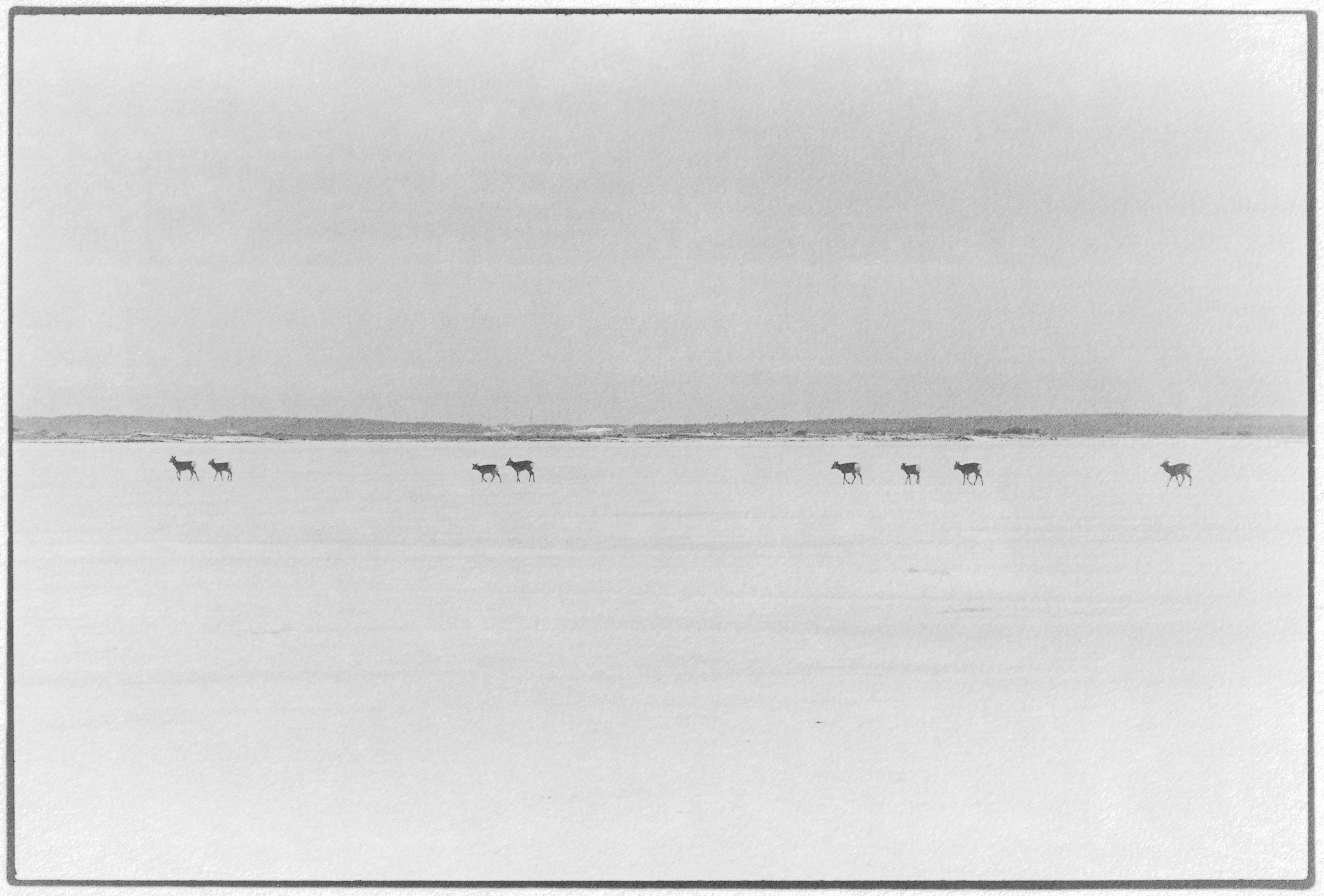
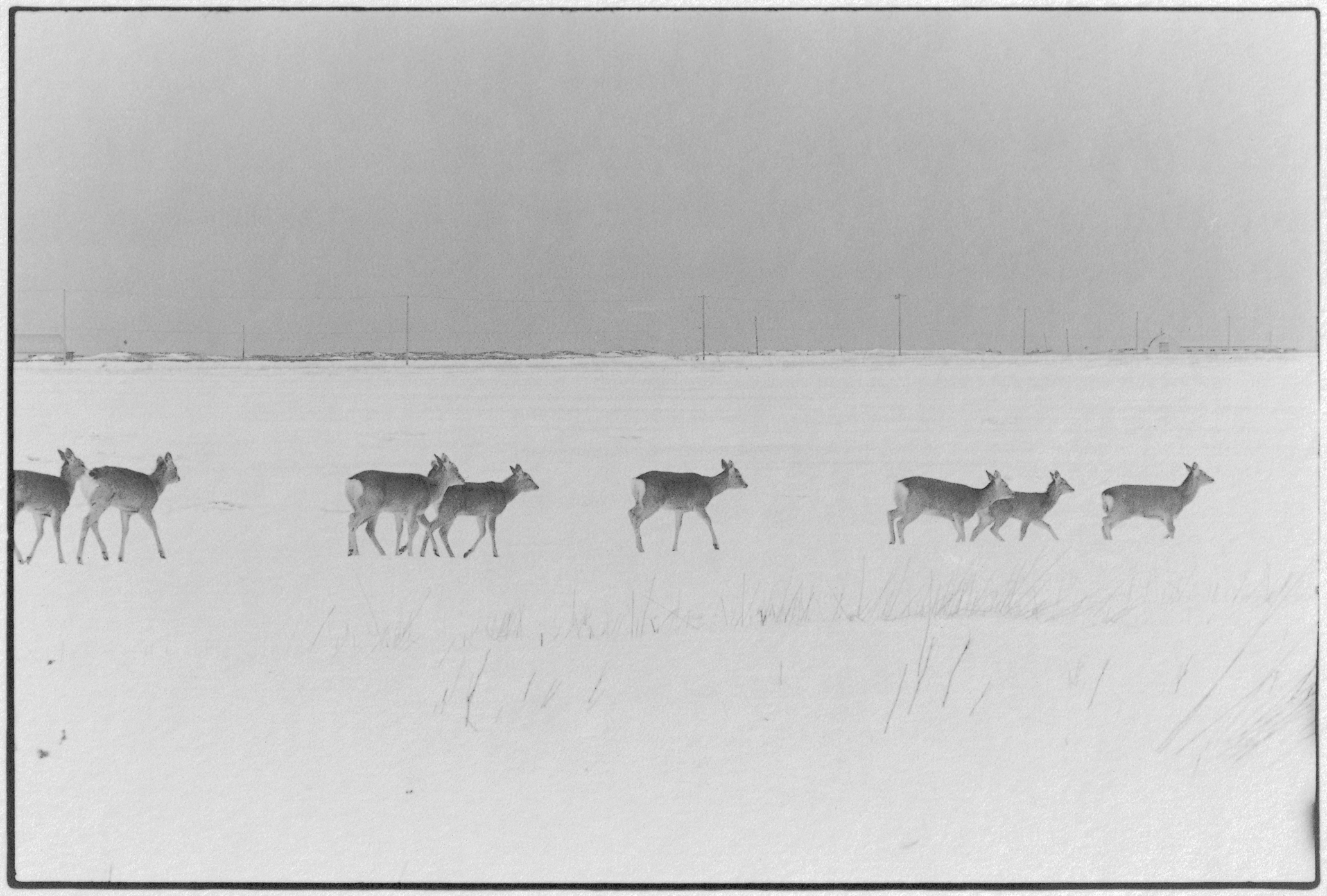
真冬の大地を巡るなか、夕暮れの凍った湖をちいさく一列になって渡るエゾシカの群れに遭遇した。
群れを眺めているうち、空と森とシカが一列に連なる自然の摂理を感じ、なにか神聖なものを見てしまったようなおごそかな気持ちになった。
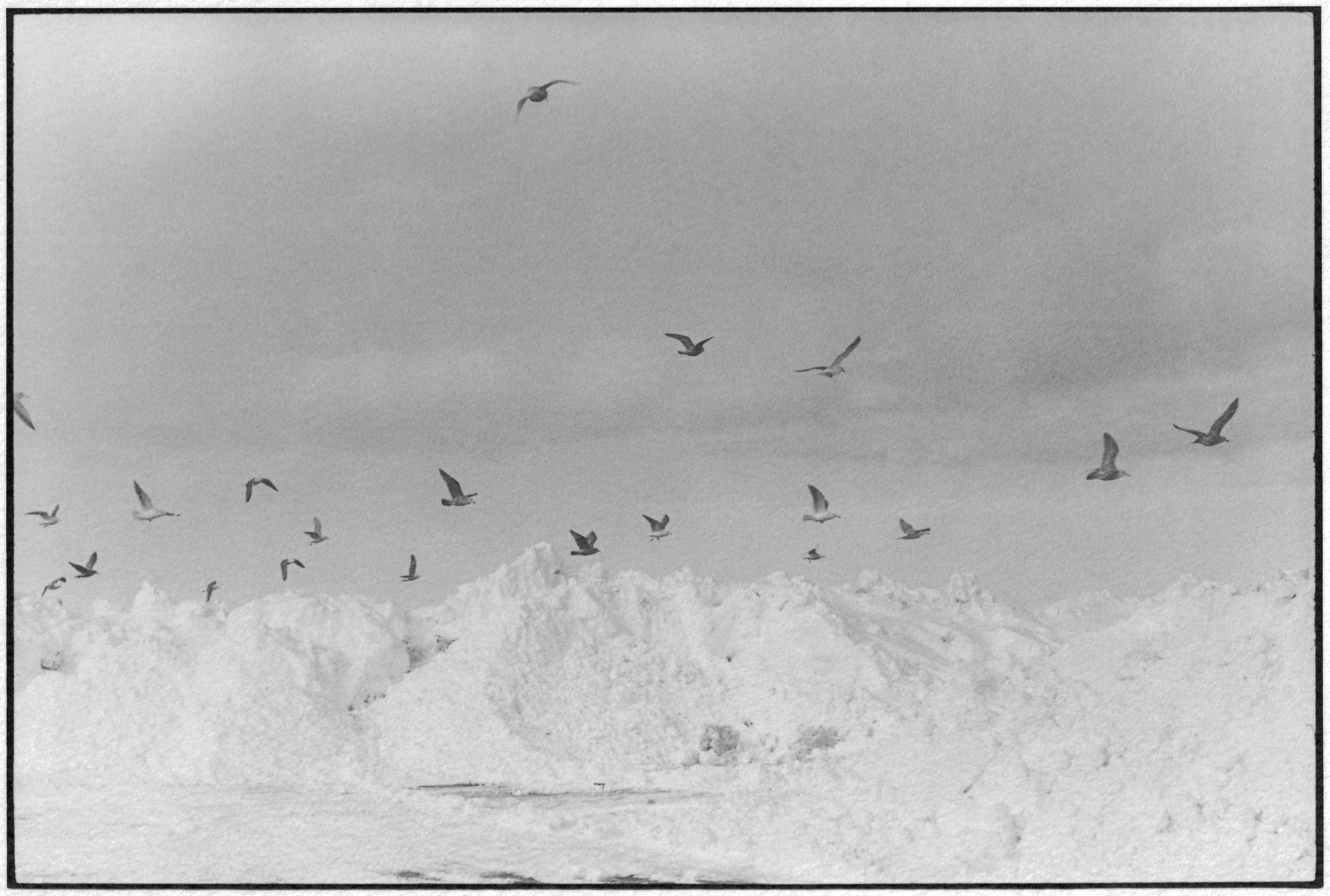
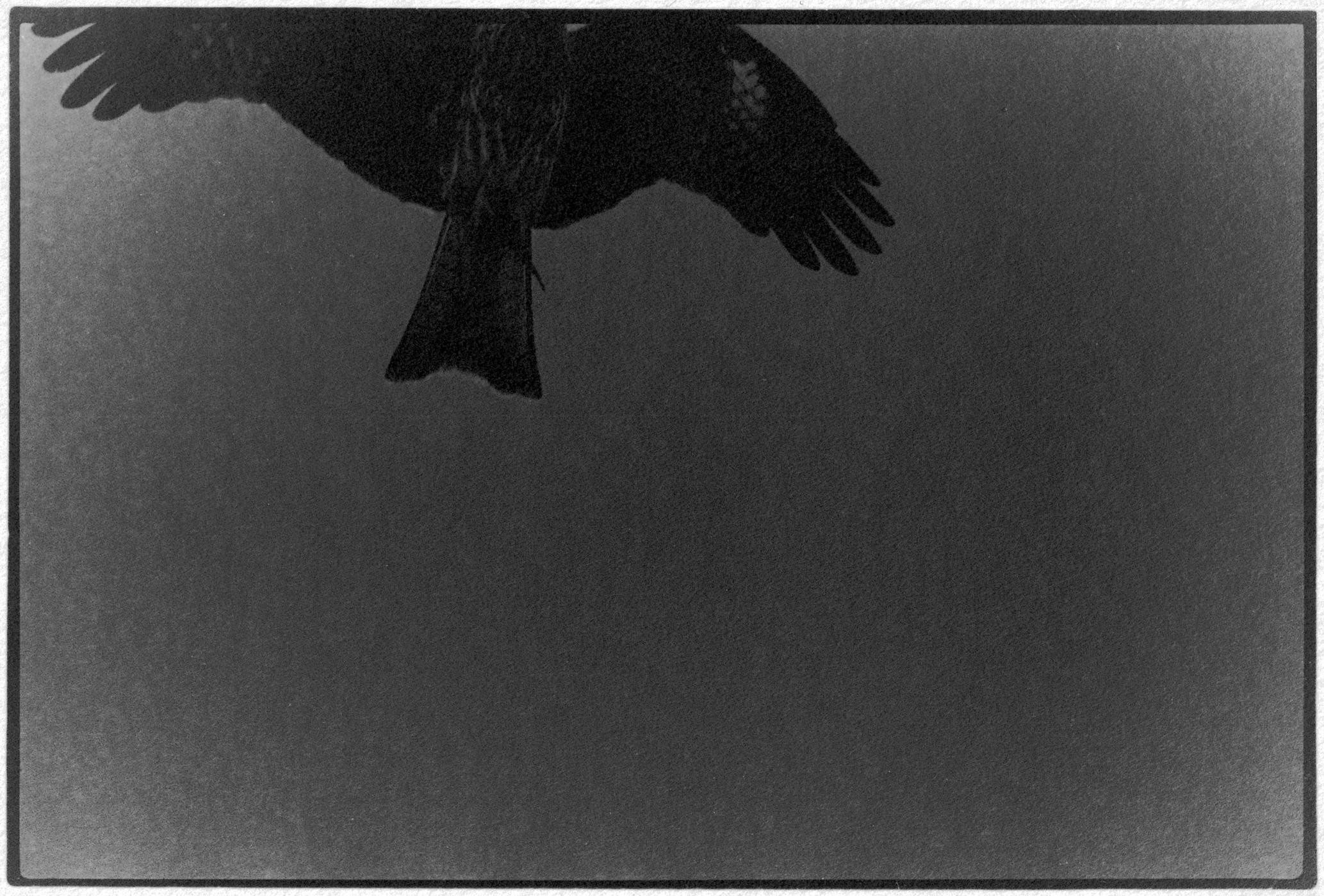
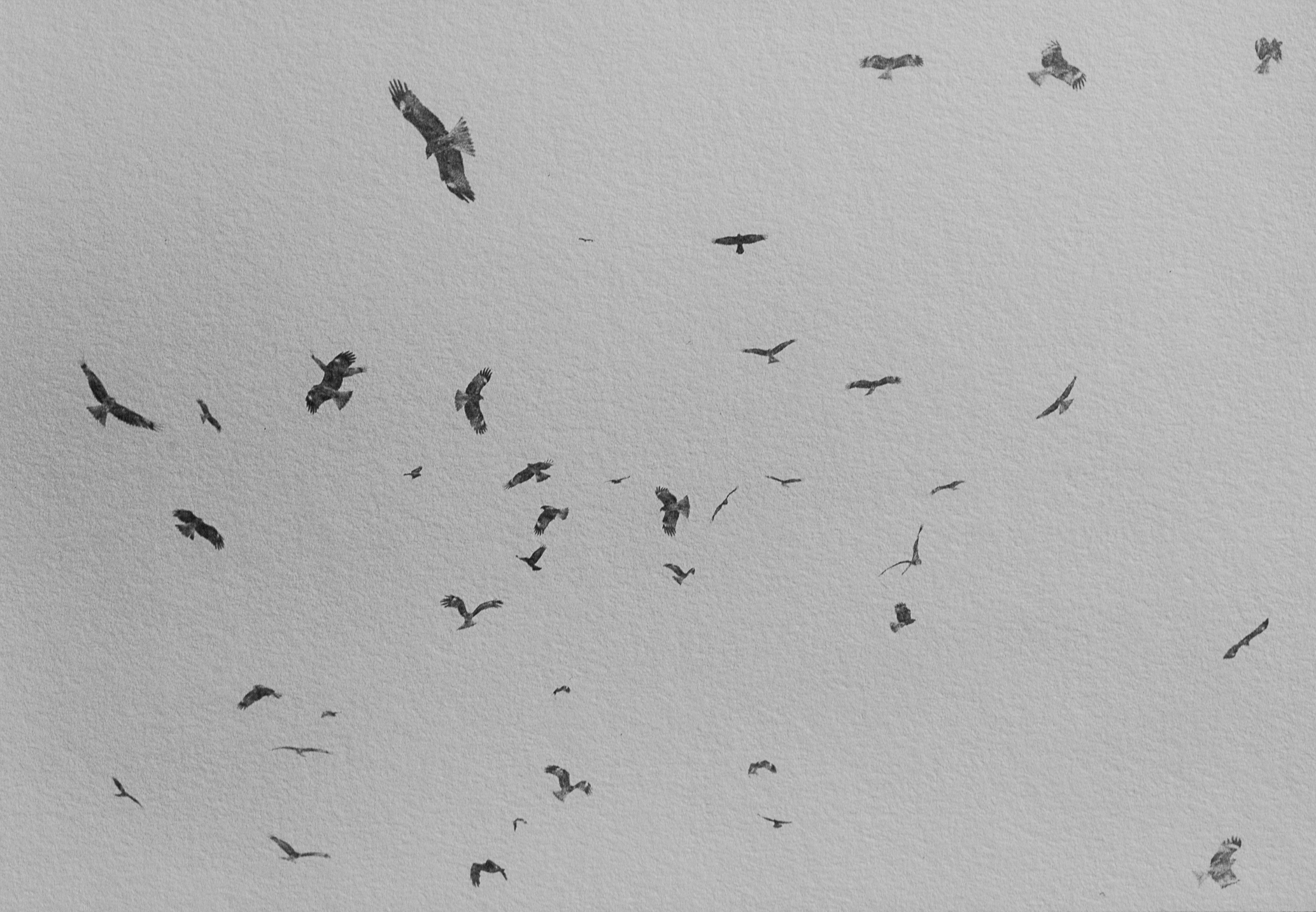
海辺に出ると、渡り鳥が岬の気流にのって飛んで行く。北海道の真ん中を渡るコハクチョウには、そこが数十万年前に海岸線だった記憶が刻まれていて、今も過去の鳥の地図を継承し、渡りを繰り返しているという。
道東では、今まで感じたことのない大きな自然との一体感の中で、弱い光に包まれながら、私と鹿と自然が一本の道でつながっていくのだった。
Eastern Hokkaido in winter.
A thinly overcast sky and snow softly illuminated the surroundings, a faint white glow spreading endlessly over the land.
Coming from the deep blue skies of Tokyo, I felt a quietness there as if the place were asleep, and in an instant it seemed I had wandered into a faraway region.
Wrapped in silence, I strained my ears.
On this white, soundless plain, it felt as though even the sound of a single clump of snow falling from the branches of distant forest trees could be heard.
As I traveled through the depths of midwinter, I encountered a herd of Ezo deer crossing a frozen lake at dusk, moving in a small single line.
Watching them, I sensed the natural order that aligned sky, forest, and deer in one continuous line, and a solemn feeling came over me, as if I had witnessed something sacred.
When I reached the coast, migratory birds rode the air currents around the cape and flew on.
It is said that the whooper swans that cross the heart of Hokkaido carry within them memories of a time, hundreds of thousands of years ago, when the land was coastline
and that even now they inherit ancient avian maps, repeating their migrations.
In eastern Hokkaido, wrapped in gentle light and a sense of unity with nature unlike anything I had felt before, I found myself, the deer, and nature all becoming connected along a single path.
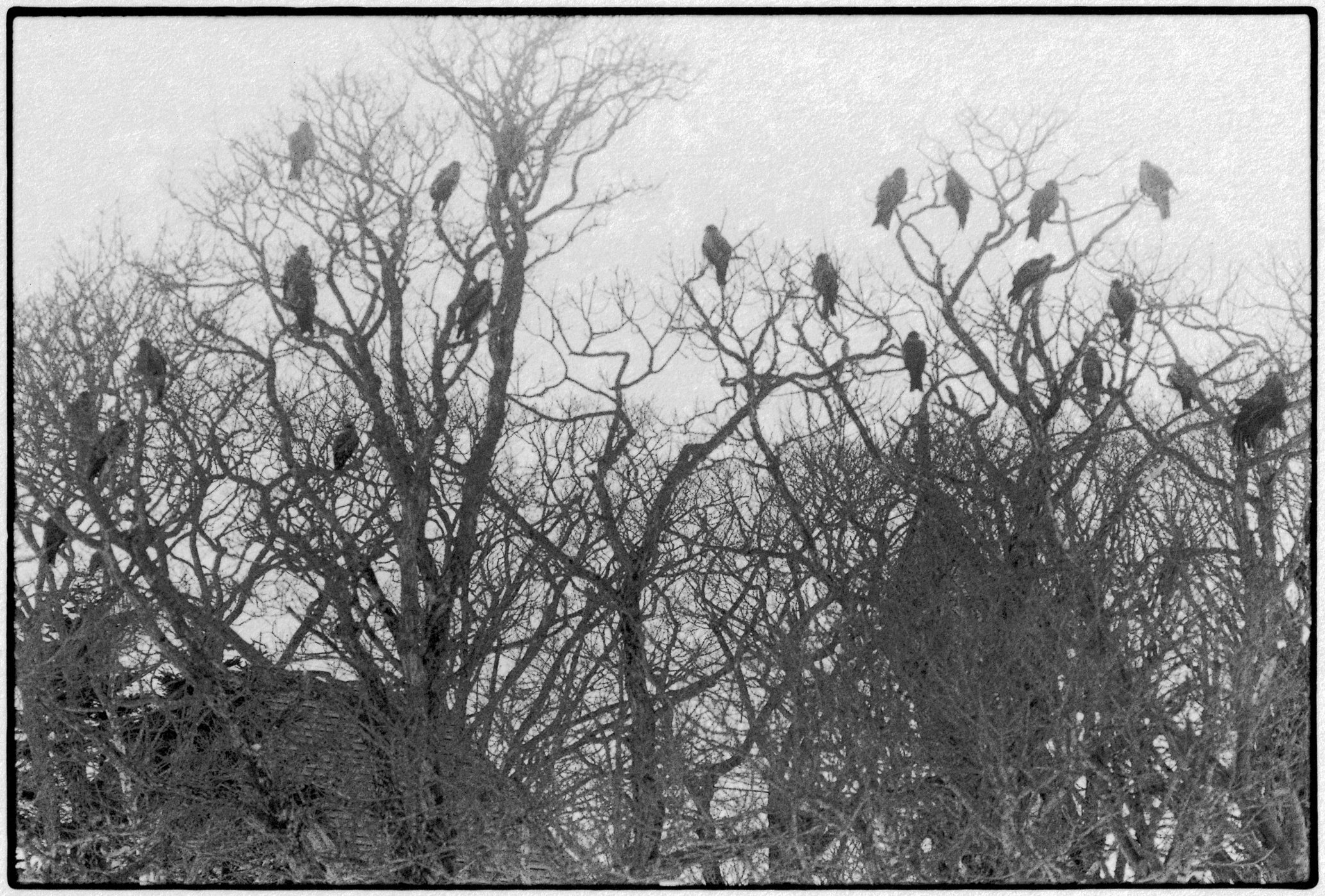
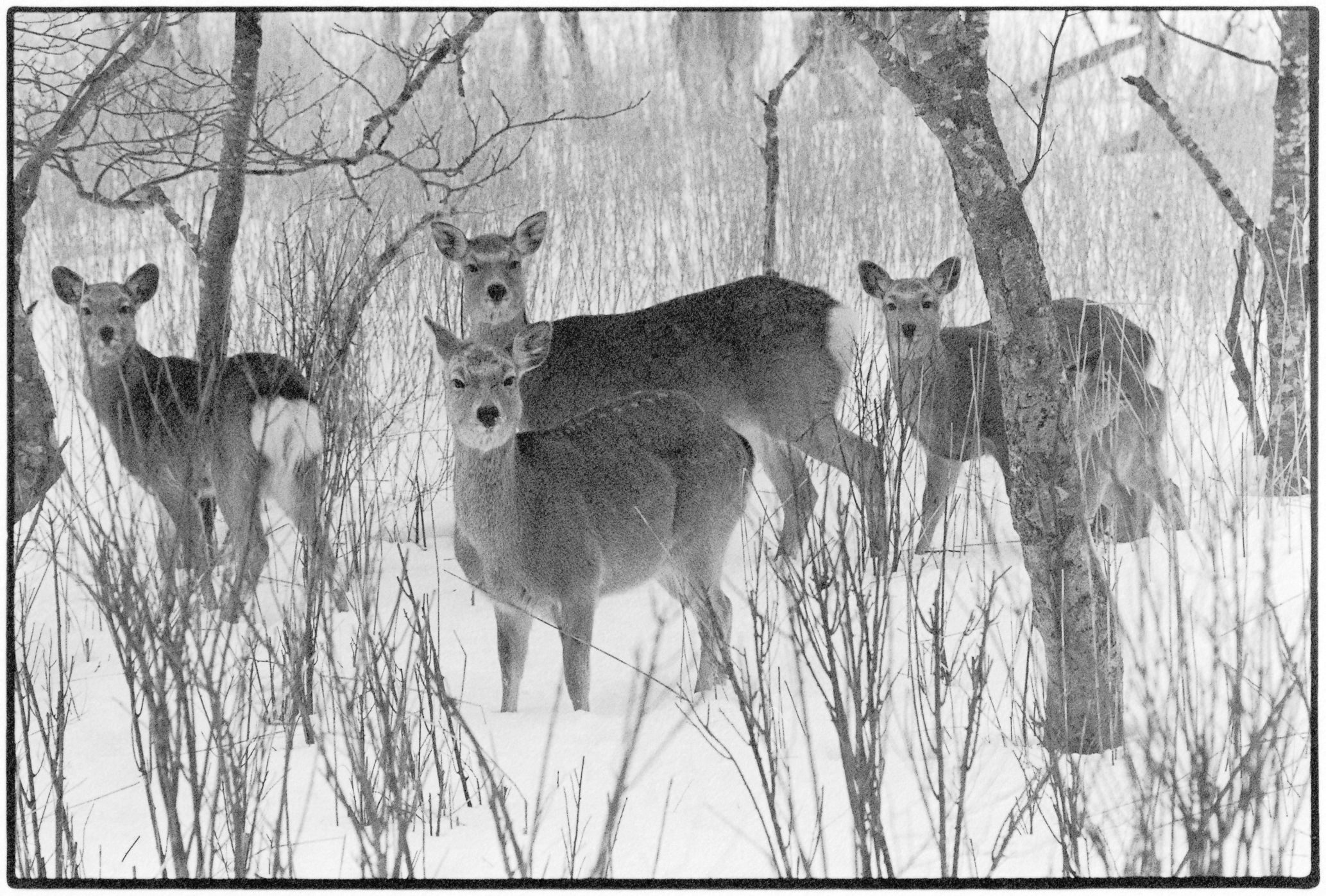
神奈川出身のフォトグラファー白石ちえこ氏は、1990年代よりアジアを巡る旅の中で、日常や旅の中にある記憶の原風景を求め写真を撮り始めました。2015年からは、冬の北海道・道東に通い、エゾシカを中心に北海道の自然を追い求め作品制作を続けました。
この度Gallery Photographsでは、その冬の道東を舞台に撮影した写真集「鹿渡り」より30点の作品をご紹介させていただいております。写真集に未掲載の作品も含め、独自のインタビューと共に、ぜひお楽しみくださいませ。
Japanese photographer Chieko Shiraishi began taking photographs in the 1990s during her travels around Asia, seeking out primal landscapes that evoke memories of everyday life and travel. Since 2015, she has been visiting eastern Hokkaido in the winter, creating works that explore the island’s natural environment, with a focus on Ezo deer.
Gallery Photographs is pleased to present 30 works from her photo book “Deer Crossing,” which features photographs taken in eastern Hokkaido in the winter. We hope you enjoy these works, including some not yet published in the book, along with an exclusive interview with her.
インタビュー / INTERVIEW
– まず、写真を始めたきっかけを教えていただけますか?
1990年代にアジアを巡る旅の中で、旅で出会った方にお借りしたカメラで写真を撮りはじめました。インドで安価だったモノクロフィルムを使用しました。
帰国すると自宅のすぐ近くの町の施設で暗室モノクロ引き伸ばし講座が開催されるのを見つけて参加しました。そこで初めて現像や暗室作業を覚えました。それまでは自分で写真を作れることを知りませんでした。
その講座では、スキルの他にも写真の記録性や表現性という、制作の核心にも触れられ、写真の奥深さに気づかされました。 暗室の時空を超えるような独特な空間や、そこで魔法のように現れる過ぎ去った時間の像に魅せられ、その後国内でもモノクロフィルムで写真を撮るようになりました。
– Firstly, will you tell us how you started photography?
During my travels around Asia in the 1990s, I began taking photographs with a camera I borrowed from someone I met on the road. I used black-and-white film, which was inexpensive in India then.
After returning to Japan, I discovered that a local community facility near my house was offering a black-and-white darkroom printing course, and I decided to enroll. There, I learned film development and darkroom techniques for the first time. Until then, I had never realized that it was possible to create photographs by myself.
Beyond technical skills, the course also introduced me to the essential qualities of photography—its ability to record reality and to serve as a means of expression—making me aware of its depth. I was captivated by the darkroom’s unique, almost time-transcending atmosphere, and by the images of moments long past that appeared as if by magic. From then on, I continued to photograph using black-and-white film, including in my work within Japan.
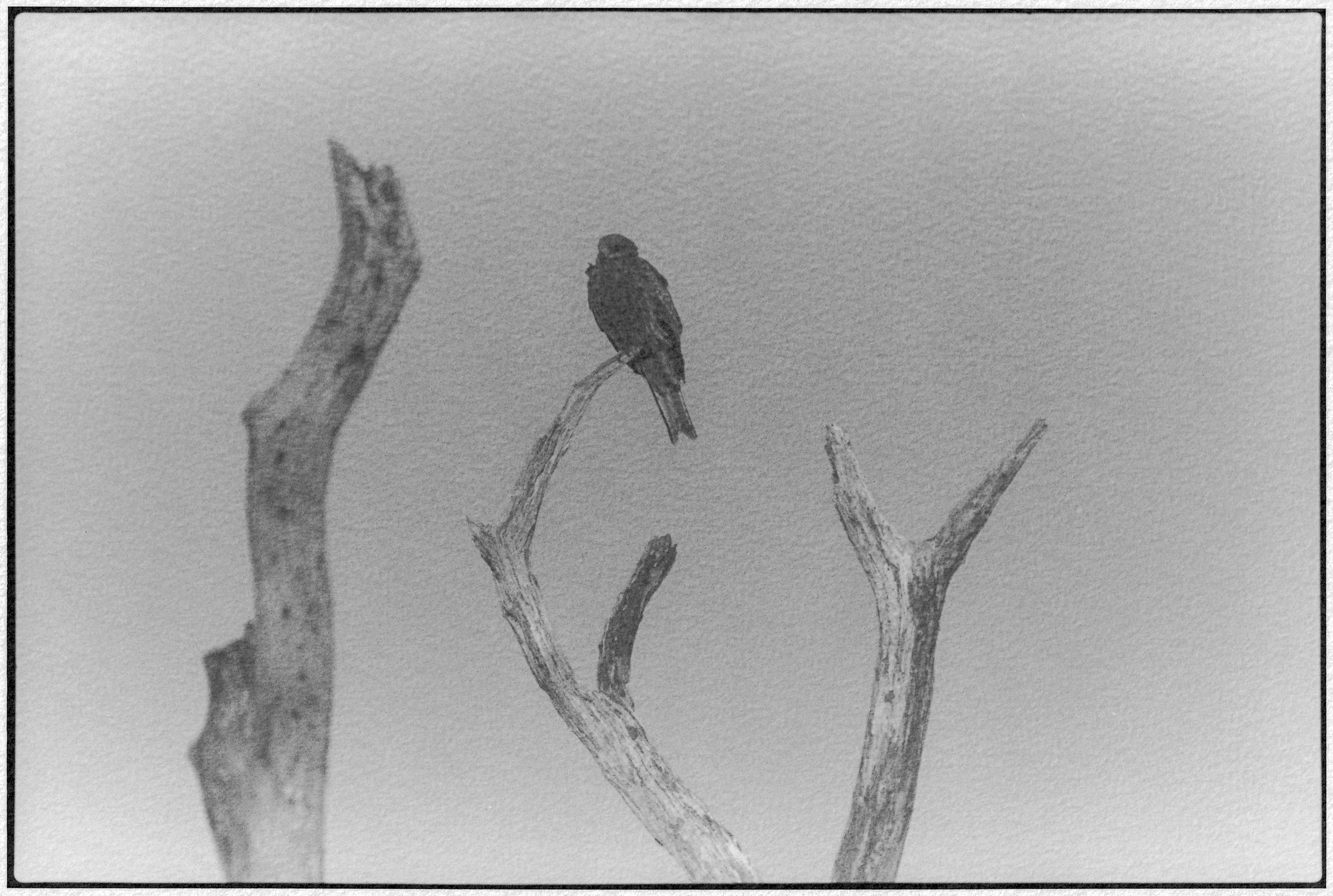
– 「鹿渡り」は北海道で撮影されたシリーズですね。これらの作品を撮影するにあたって、最も白石さん の心を捉えたものは何だったのでしょうか?
「鹿渡り」の始まりは、2014年冬の北海道を訪れた時からで、2020年まで毎冬、道東を旅して撮影してきました。
2011年の震災以降、閉塞感が募る中で出会った冬の道東の風景でした。真っ白な静けさの中、薄明かりに照らされた凍湖を一列になって渡るエゾシカたちの姿は、私には鮮烈な出会いとなりました。動物や自然を身近に感じながらの撮影では先人たちの自然観や、北海道の生き物たちに引き継がれている記憶に想いを馳せるようになりました。私と自然とが結ばれていくような不思議な一体感が湧き上がり、震災以後に深呼吸できた気持ちになりました。
日本では鹿は神の遣いと言われます。人間と大自然とをつなぐ仲介者として、鹿たちが水先案内人となって私を誘ってくれたようでした。
2020年のコロナ禍の最中に、このシリーズをまとめ、写真集を自費出版しました。
– “Shikawatari (Deer Crossing)” is a series photographed in Hokkaido. When creating these works, what was it that most deeply captured your attention?
Shikawatari (Deer Crossing) began when I visited Hokkaido in the winter of 2014, and until 2020 I traveled to eastern Hokkaido every winter to photograph the region.
After the 2011 earthquake and disaster, I was living with a growing sense of stagnation, and it was during that time that I encountered the winter landscapes of eastern Hokkaido. In the pure white stillness, the sight of Ezo deer crossing a frozen lake in a single line, illuminated by faint twilight, was an overwhelming and unforgettable encounter for me. As I photographed while feeling close to animals and nature, I found myself reflecting on the views of nature held by those who came before us, and on the memories passed down through the living creatures of Hokkaido. A mysterious sense of unity welled up, as if nature and I were being gently bound together, and for the first time since the disaster, I felt as though I could finally take a deep breath.
In Japan, deer are said to be messengers of the gods. As intermediaries connecting human beings and the vas natural world, it felt as though the deer guiding me forward, acting as my navigators.
In 2020, in the midst of the COVID-19 pandemic, I brought this series together and self-published it as a photobook.
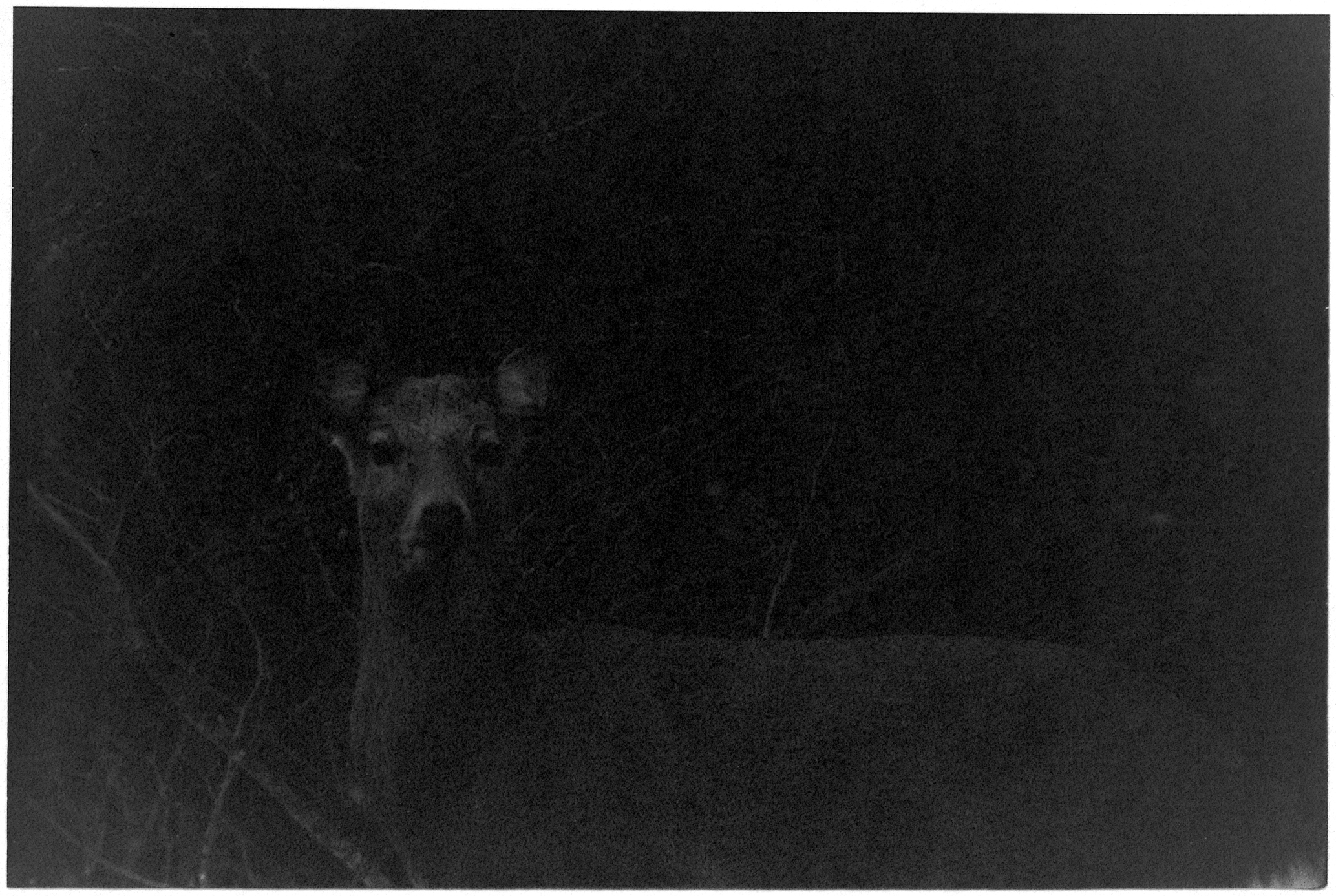
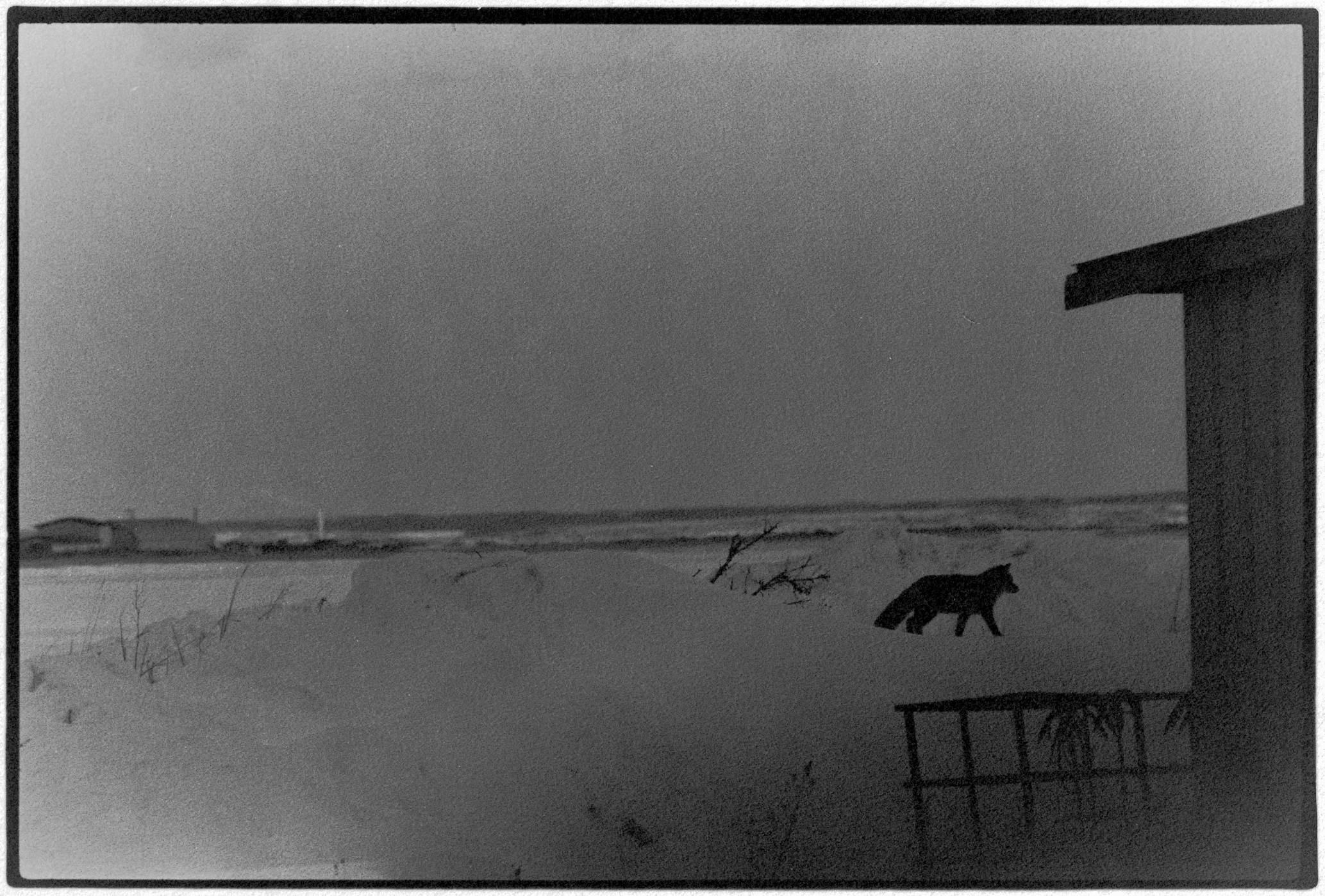
– 今回ご紹介いただいている「鹿渡り」もそうですが、白石さんの作品はモノクロフィルムで撮影されて いるようですね。モノクロにこだわって制作している何か特別な理由などはあるのでしょうか?
フィルム現像からプリントまで、自分でできるところです。暗室で完成させたプリントには何か〝自分の分身〟的な意識がわいて、愛着がわきます。
また色の情報が限られることで、対象の存在が際立つことが 魅力でもあります。
-The series Shikawatari introduced here, like your other works, is photographed on black-and-white film. Is there a particular reason you choose to work in black and white?
One reason is that I can handle everything myself, from film development through to printing. I feel a sense of attachment to the prints I complete in the darkroom, as if they were “another version of myself.”
Another appeal lies in the limitation of color information—by reducing color, the presence of the subject itself becomes more pronounced.
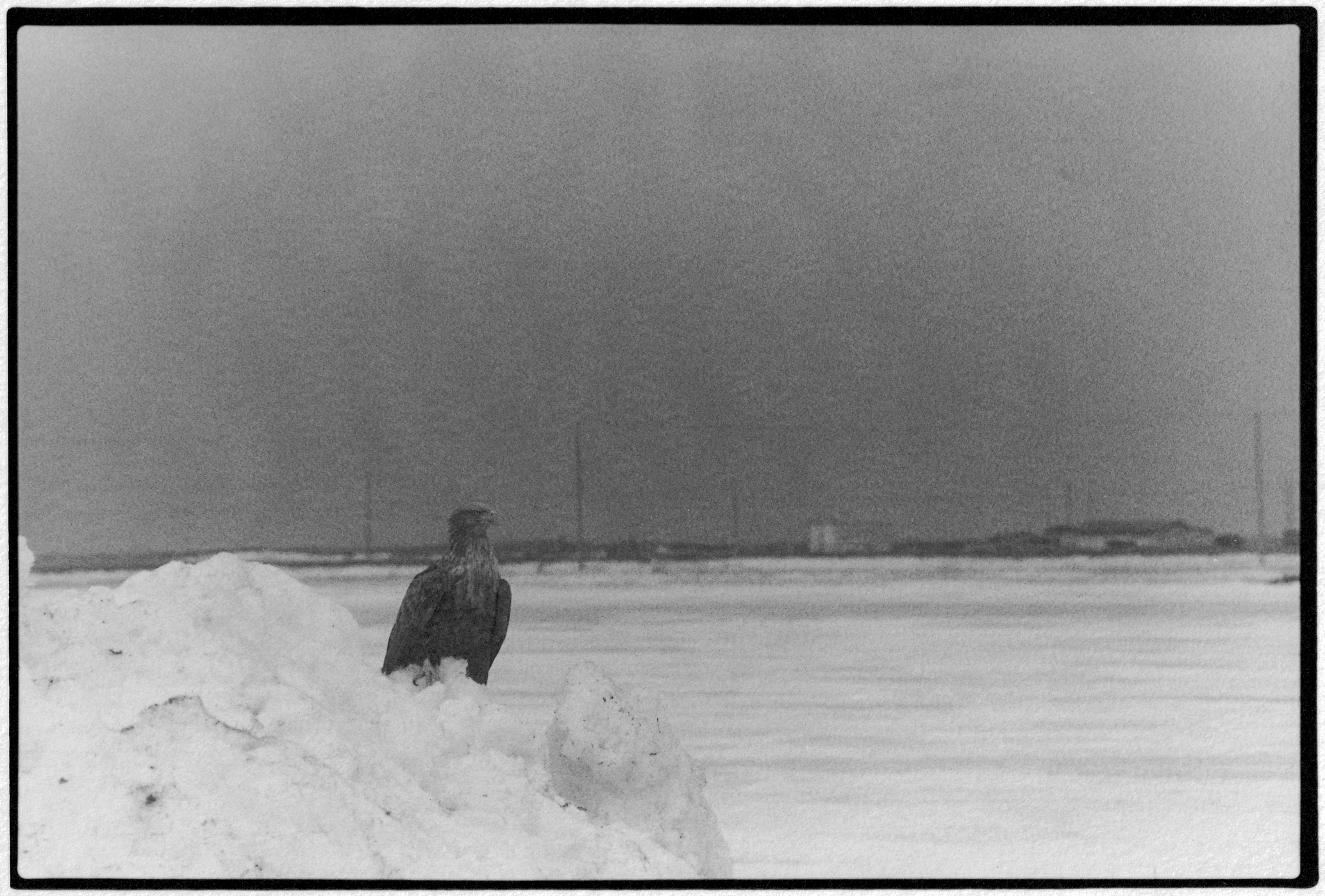
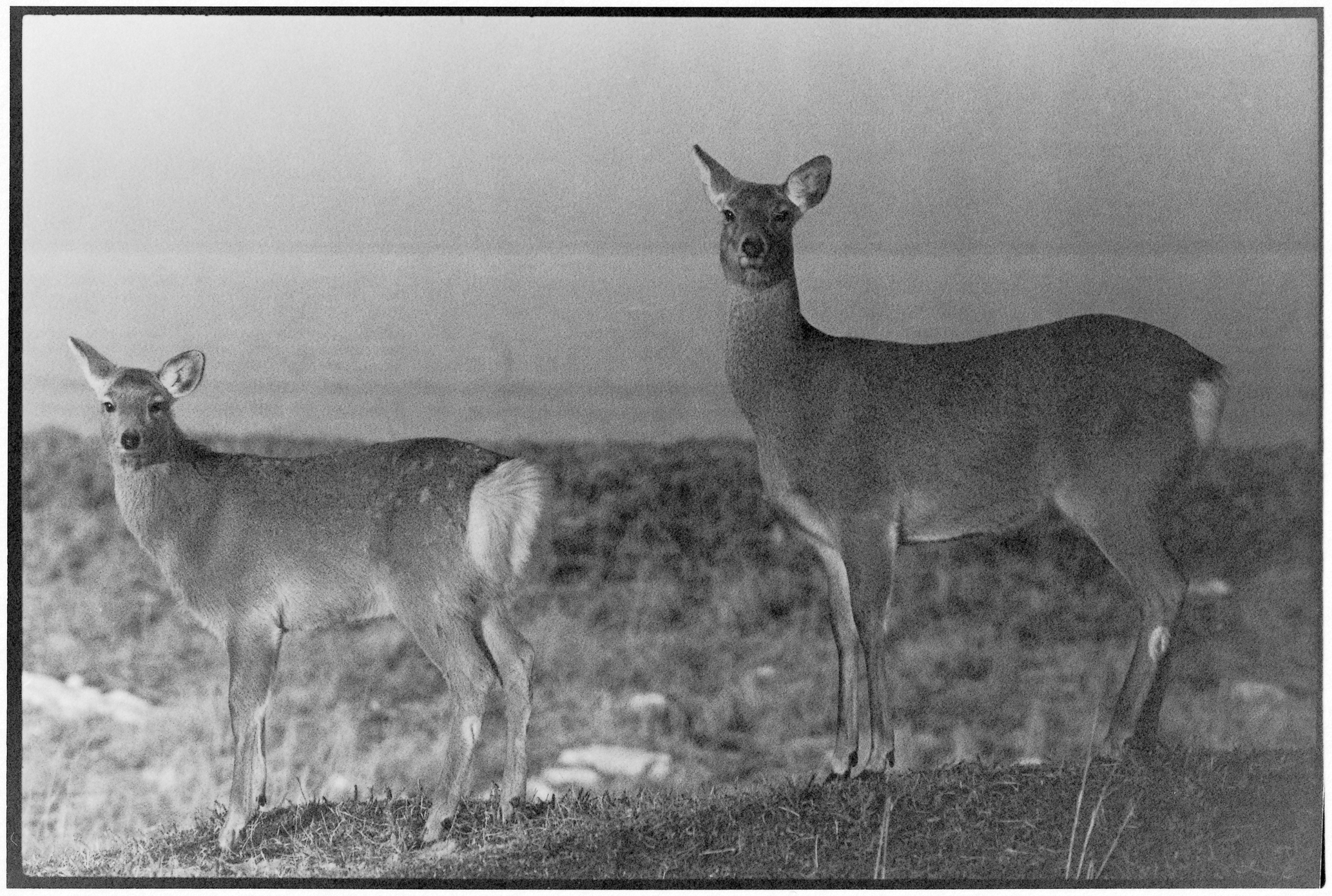
– 白石さんの作品は、リアリティがありながらもどこか懐かしいような幻想的な雰囲気が感じられます。 このような雰囲気は、作品を制作する際に意識して作り出されているのでしょうか?
撮影時にはそれが作品になるかどうかを意識していません。自分を空っぽにして、出会った目の前の風景 や時間、起こった出来事に向き合うことに集中しています。そうしてたくさん撮りためた写真をあとから 見返して、改めて自分が何を見ていたのかを再確認しながらセレクトし、作品にまとめます。
風景と人間 のつながりに関心があり、自分自身の記憶、それを日常的に見ている者たちの暮らし、原風景に思いを寄 せながら撮影しています。写真にリアリティを感じるのは、撮ったままでトリミングなどで画像を整えた りしていないこともあるかも知れません。
-Your work has a sense of reality, yet at the same time conveys a somewhat nostalgic and dreamlike atmosphere. Is this mood something you consciously aim to create when producing your photographs?
When I am photographing, I am not consciously thinking about whether the images will become finished works. I try to empty myself and focus on engaging with the scenery and the time, and also with the events that I encounter before my eyes. I then look back over the many photographs I have accumulated, re-examining what I was actually seeing, and then select and assemble them into works.
I am interested in the connection between landscape and human beings, and I photograph while reflecting on my own memories, the everyday lives of those who inhabit these places, and their original landscapes. The sense of reality in the photographs may also come from the fact that I leave the images as they were taken, without adjusting them through cropping or other manipulations.
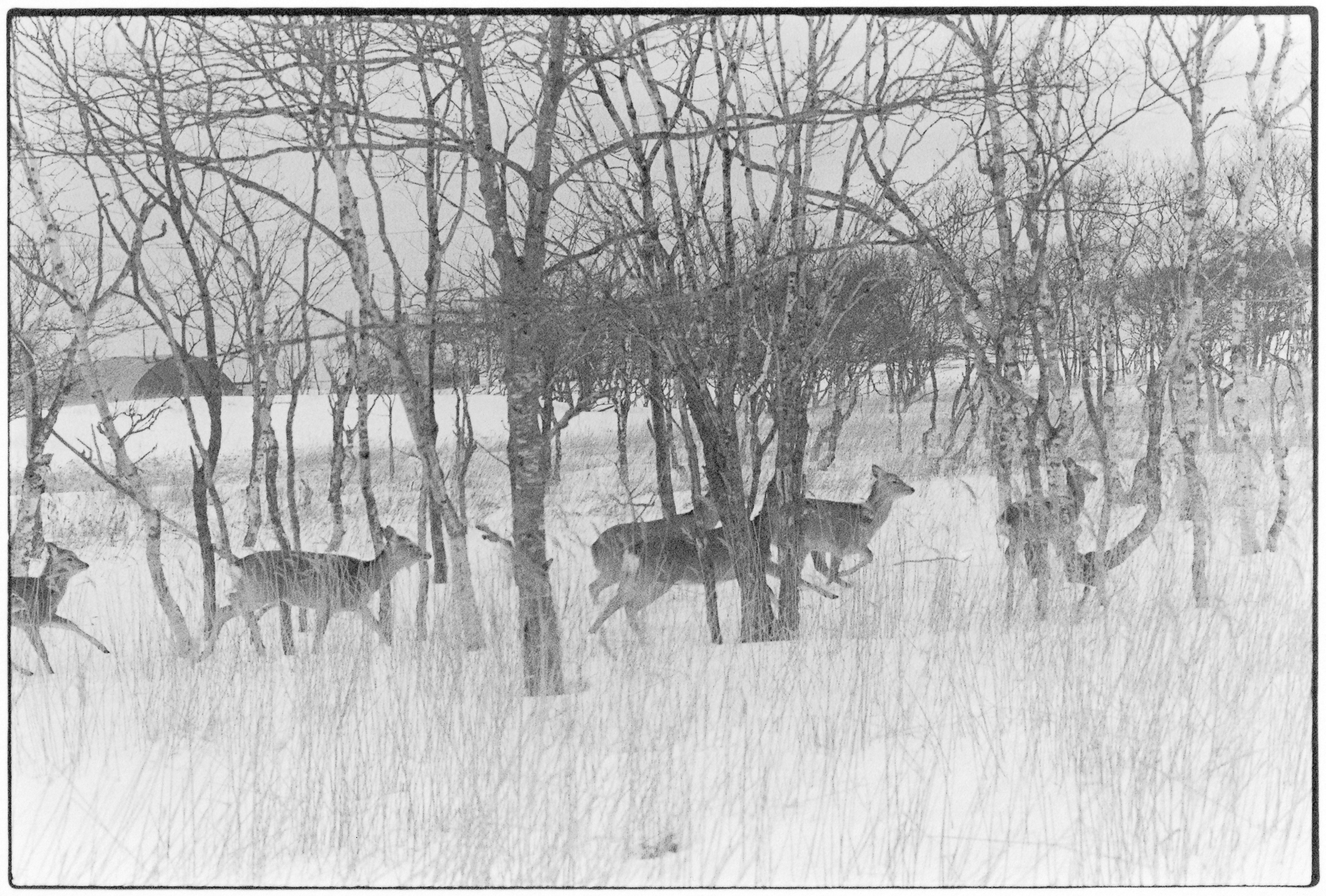
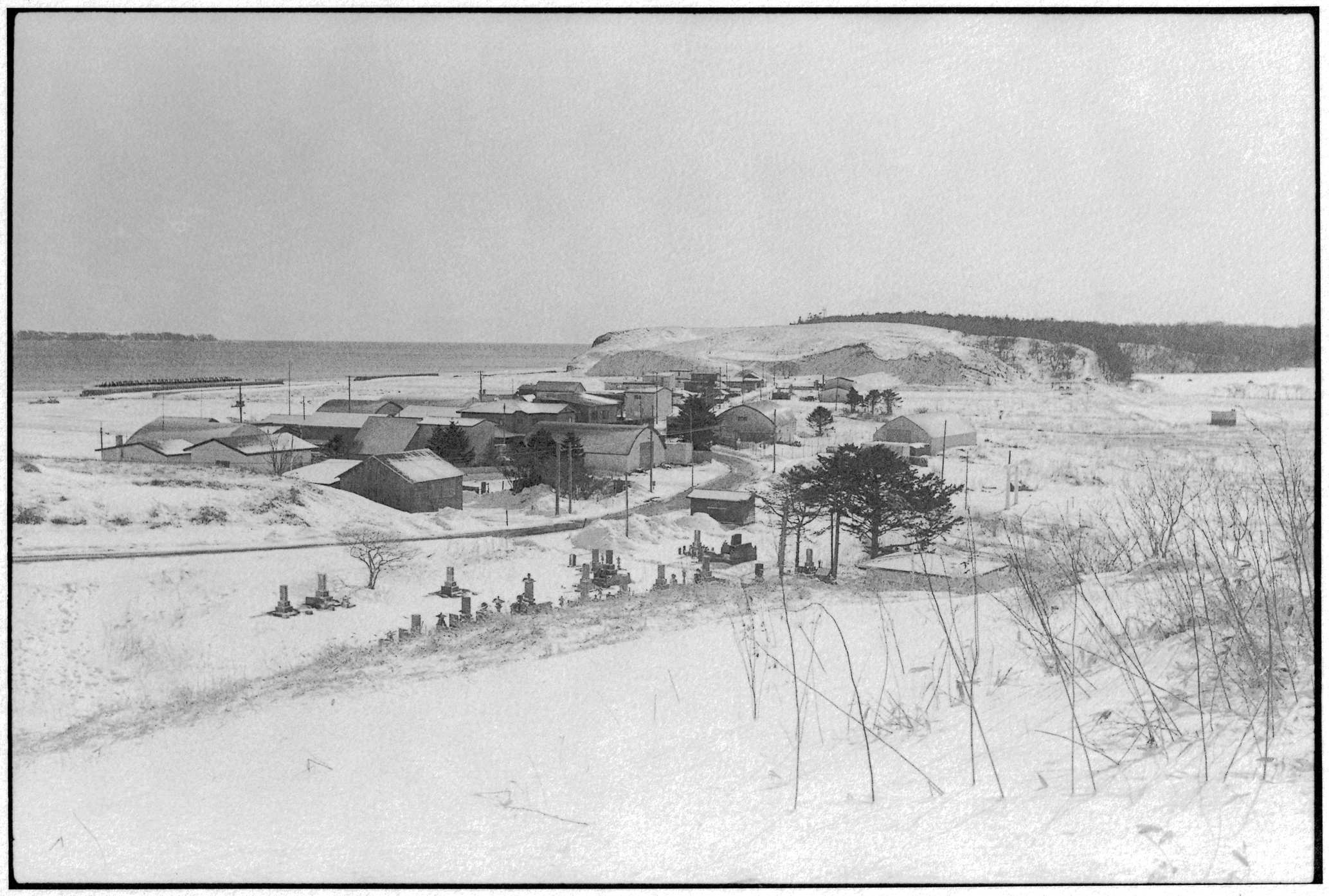
– 通常、撮影場所や被写体はどのように選び、また写真を撮る瞬間にはどのようなことを考えていらっ しゃるのでしょうか?
写真を撮る瞬間にはあまり何も考えていないかも知れません。いつ撮ったのか忘れているものもありま す。
撮影場所は『鹿渡り』の場合は、前作『島影』を冬の北海道の会場のモノクログループ展にご招待いただ いたのがきっかけでした。初めて冬の北海道を体験し、静けさと淡い光の美しさに惹かれ、翌年からカメ ラを準備して出かけました。
東日本大震災後に写真が撮れなくなっていたのですが、ここでならまた何か に出会えるかも知れない、撮れるかも知れない、と直感しました。 そこで凍った湖を渡るエゾシカの群れに出会い、その後、誘われるように毎冬、道東へ通うことになりま す。
-How do you usually choose your shooting locations and subjects, and what are you thinking about at the moment you take a photograph?
I may not be thinking very much at all when I take a photograph. There are even images for which I no longer remember exactly when they were taken.
In the case of the Shikawatari series, the locations came about after I was invited to participate in a group exhibition of black-and-white photography held in Hokkaido in winter, following my previous work Shimakage. Experiencing Hokkaido in winter for the first time, I was drawn to the beauty of its silence and faint light, and from the following year I began traveling there with my camera.
After the Great East Japan Earthquake, there was a period when I found myself unable to take photographs at all. Yet I had an intuitive feeling that in this place, I might encounter something again—that I might be able to photograph once more. There, I came across a herd of Ezo deer crossing a frozen lake, and from then on, as if guided, I began returning to eastern Hokkaido every winter.
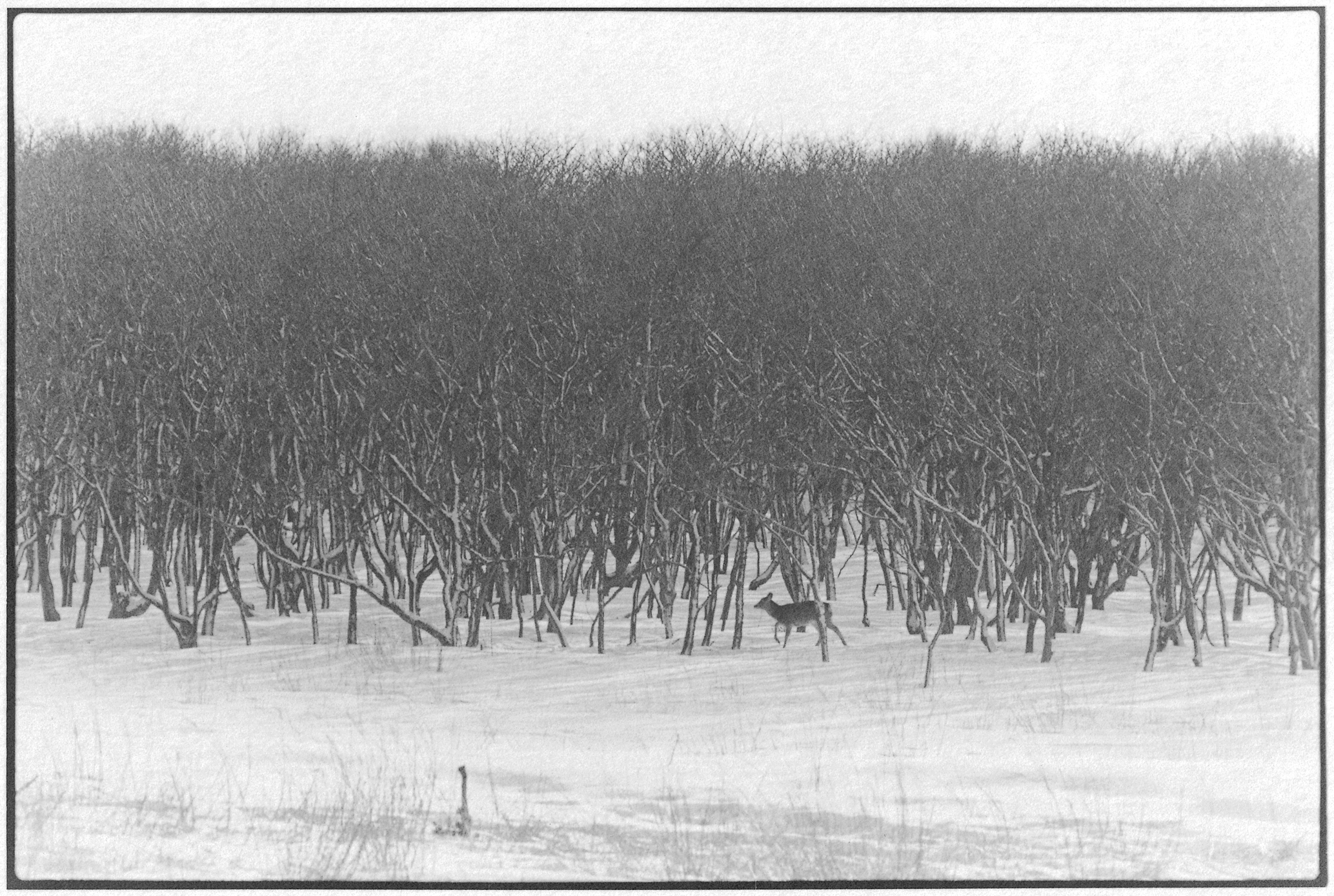
– 制作過程において、最も楽しんでいらっしゃることは何ですか?また、最も難しいと感じることは何で しょうか?
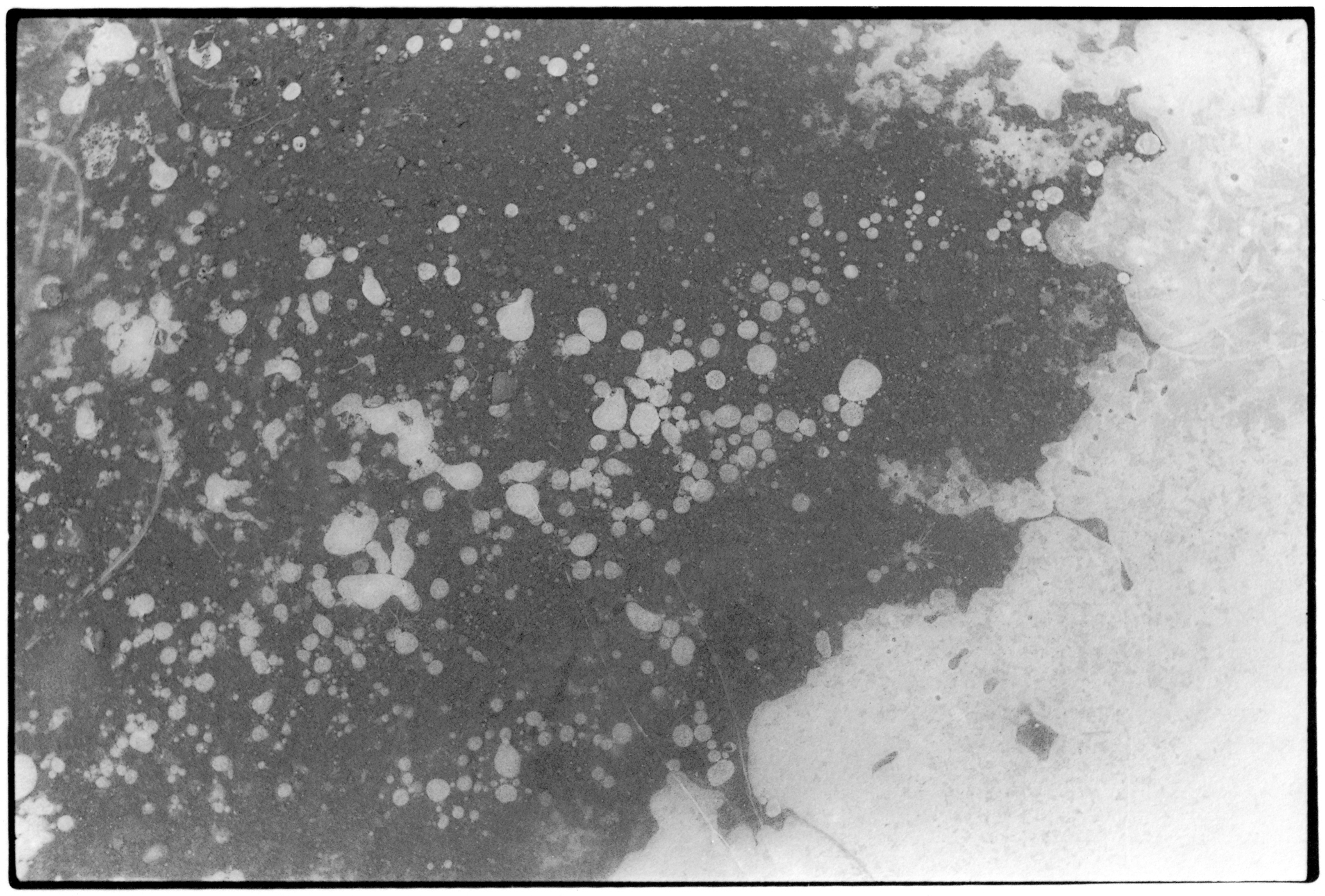
目的地もなく彷徨いながら対象と出会うことの楽しさがあります。
コンセプトを立てて撮影を始めるので なく、自分の潜在意識にある直感を大事に対象を撮影することが多いので、その無意識の意識化、作品化 がいつも難題としてあります。暗室作業ではいつもトーンを模索しています。被写体にぴったりのトーン を見つけられた時は本当に嬉しく感じます。
-In your creative process, what do you find most enjoyable? And conversely, what do you find most challenging?
I take great pleasure in wandering without a fixed destination and encountering my subjects along the way.
Rather than beginning with a predefined concept, I often photograph while valuing intuitive responses that arise from my subconscious. Because of this, turning those unconscious impulses into something conscious and giving them form as finished works is always a challenge.In the darkroom, I am constantly searching for the right tones. When I finally discover a tonal balance that feels perfectly suited to the subject, it brings me a deep sense of joy.
– 使用しているカメラ機材に何かこだわりはありますか?
30年近く、同じ、少ない機材で撮影しています。レンジファインダーのカメラ2台とコンパクトカメラ1台です。『鹿渡り』では一眼レフも使用しました。
– Do you have any particular preferences for the camera equipment you use?
I’ve been photographing with the same minimal set of equipment for nearly 30 years: two rangefinder cameras and one compact camera. I also used an SLR for “Shikawatari.”
– 作品制作に影響を受けたアーティストや写真家はいらっしゃいますか?
北井一夫さん、中里和人さん、尾仲浩二さんです。長く、粘り強く制作を続けていくにあたってたくさん の力をいただいています。
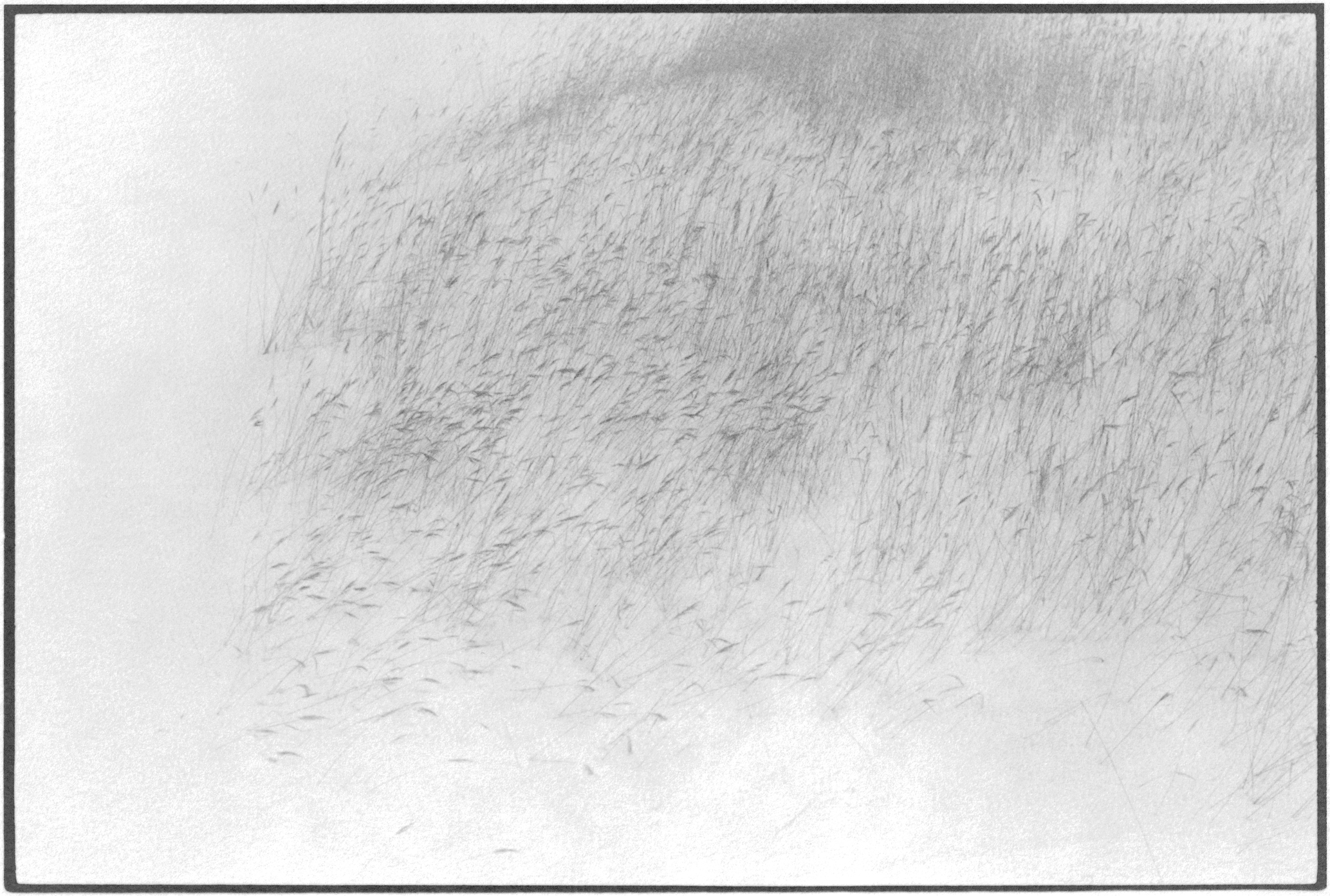
対象の生命感、撮影者の存在感、息づかいまでも伝わるようなヴォルス(アルフレート=オットー=ヴォルフガング=シュルツェ 1913-51, ドイツの画家・写真家)の写真が好きです。
–Are there any artists or photographers who have influenced your work?
Kazuo Kitai (Japanese Photographer), Katsuhito Nakazato (Japanese Photographer), and Koji Onaka (Japanese Photographer). They have all given me a lot of strength and perseverance in continuing my work for so long. I also love the photographs of Wols (Alfred Otto Wolfgang Schulze, 1913–1951, German Artist), in which the vitality of the subject, the presence of the photographer, and even the sense of breathing are conveyed so vividly.
– 将来的に何かやりたいことや、今すでに考えていることがあれば教えてください。
わたしの作品はごく個人的なものですが、暗くて狭い土の中を深く掘り進んでいけば、やがて地下の水脈 のような場所にたどり着いて、そこで私の写真に共感してくれる人と出会えるかもしれない。見知らぬ誰 かと深い場所で繋がることができるかも知れない。そんな思いで写真を続けています。
– Looking ahead, is there anything you hope to do in the future, or any ideas you are currently considering?
My work is very personal, but I imagine it like digging deep into the dark narrow soil, I might eventually reach a place like an underground stream, where I might encounter someone who resonates with my photographs. Perhaps I could connect with strangers on a profound level. This is the thought that keeps me going with my photography.
神奈川県生まれ。写真家。
1990年代、アジアを巡る旅の中で写真を撮り始め、町主催のモノクロ引伸ばし講座で現像・暗室のプロセスを覚える。1998年に初個展。印画紙が次々と製造終了になることに危機感を感じ、2003年より鶏卵紙・サイアノタイプ等、オルタナティブプロセスでの制作も始める。
町の隙間に静かに佇む 一見忘れられたような風景、日常の中に潜む時間の痕跡を残すもの、人と風景の関わり-をテーマにフィルムで撮影し、自家暗室でプリントを制作している。
2016年「Tbilisi Photo Festival 」(ジョージア)、2023・24年「Photo Gaspesie」(カナダ)に参加。2021年に第37回写真の町東川賞特別作家賞、2023年Photo London×Nikon Emerging Photographer Award Shortlist、第10回便利堂 Hariban Award 審査員特別賞。
写真集に「サボテンとしっぽ 」(冬青社 2008年)、「島影」(蒼穹舎 2015年)、「鹿渡り」(蒼穹舎 2020年)。共著に「海に沈んだ町」小説/三崎亜記 (朝日新聞出版 2011年)がある。
プリント作品のお問い合わせはこちらまで: 
Japanese Photographer. Born in Kanagawa Prefecture, Japan.
She began taking photographs during her travels across Asia in the 1990s, and learned developing and darkroom processes through a municipally organized black-and-white printing workshop. In 1998 she held her first solo exhibition. Sensing a growing crisis as photographic papers were discontinued one after another, she began working with alternative processes such as albumen printing and cyanotype from 2003 onward.
Focusing on themes of seemingly forgotten landscapes that quietly exist in the gaps of the city, things that leave traces of time hidden within everyday life, and the relationship between people and their surroundings, she works with film and produces prints in her own darkroom.
She has participated in the “Tbilisi Photo Festival” (Georgia, 2016) and “Photo Gaspésie” (Canada, 2023 and 2024). Her awards include the Special Photographer Award at the 37th Higashikawa International Photo Festival (2021), a shortlist selection for the Photo London × Nikon Emerging Photographer Award (2023), and the Jury Special Prize at the 10th Benrido Hariban Award (2023).
Her photo books include “Cactus and Tail” (Tōseisha, 2008), “Shimakage (Island Shadow)” (Sokyusha, 2015), and “Shikawatari (Deer Crossing)” (Sokyusha, 2020). She is also a co-author of “The Town That Sank into the Sea” (novel by Aki Misaki, Asahi Shimbun Publishing, 2011).
For inquiries about print works :